
?We have a great idea for an app, but we don't know where to start or how long it will take.
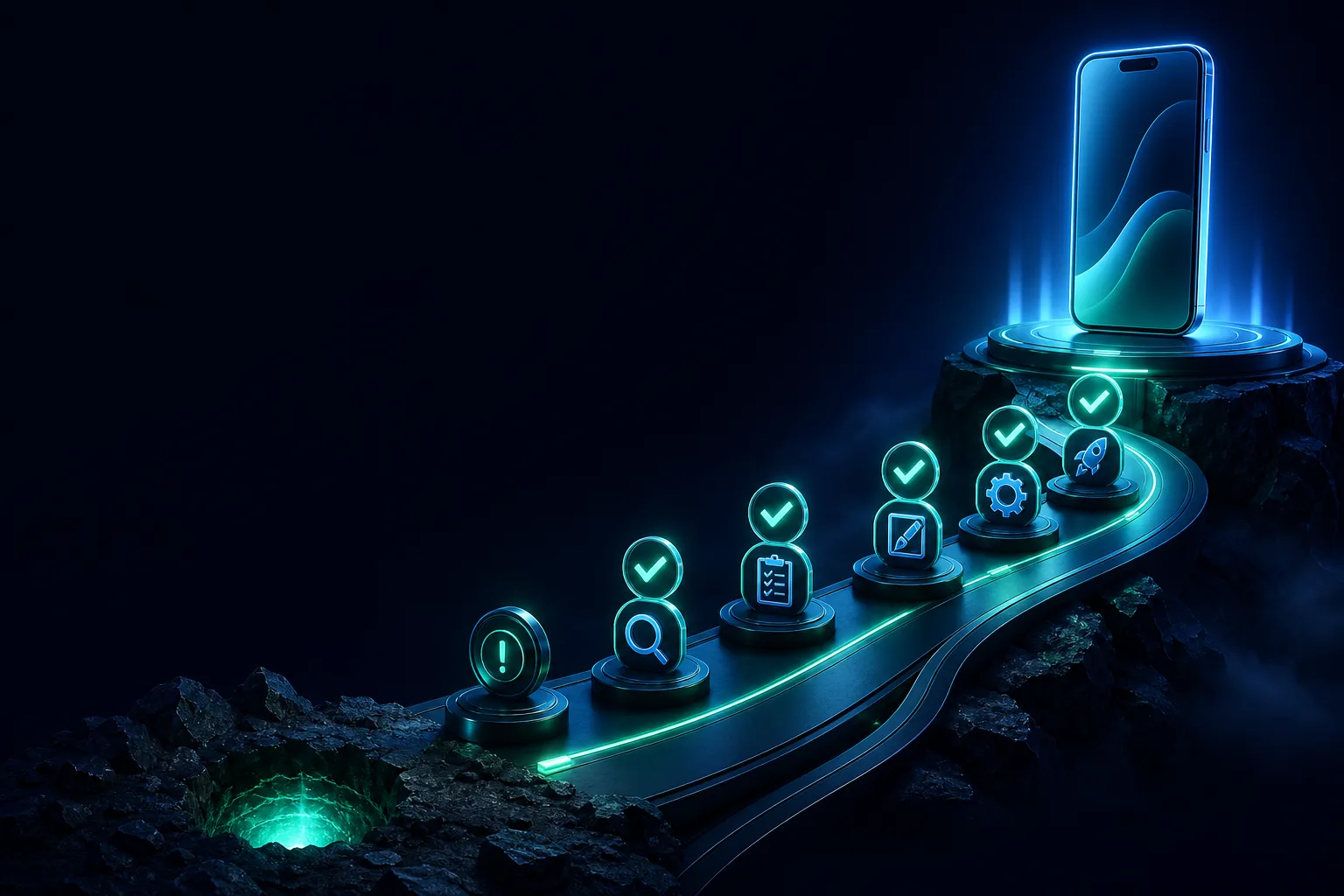
✓AWEBCs plans your app from concept to launch, giving you a clear timeline and a step-by-step roadmap so you know exactly what to expect at every stage.
Solutions
AWEBCs plans, builds and launches mobile apps for businesses and startups, from the first idea through to the app store. Tell us what your app must do, and we will scope the work and send you a written quote.
The problem you are facing
?We have a great idea for an app, but we don't know where to start or how long it will take.
✓AWEBCs plans your app from concept to launch, giving you a clear timeline and a step-by-step roadmap so you know exactly what to expect at every stage.
?Our current processes are manual and inefficient, and we need a mobile solution for our staff.
✓We build custom mobile apps for your staff that streamline workflows, reduce manual effort, and improve productivity, all designed around your specific operational needs.
?We want to engage our customers with an app, but we're worried about the cost and complexity.
✓Our team handles the entire app development process, from planning to deployment, with transparent communication and a focus on your budget, so you can engage customers without the hassle.
How it works
Consultation and Requirements Gathering
Planning and Timeline Definition
Design and Development
Testing and Launch
Launching a mobile app means turning a business idea into an installable product on a phone. At AWEBCs in Uttarakhand, India, we treat it as a planning exercise first and a build second. You get a defined scope, screens your users will actually touch, a backend that stores and serves data, and a release path to the app stores. The output is not a mockup; it is a working app you can hand to customers or staff, with documentation of what it does and how it is maintained.
The deliverable set is worth spelling out before work starts. Expect a written feature list, screen-by-screen flows, a data model, an admin or content interface where needed, and a build you can install on test devices. You also get store listing text and the assets each store requires. Ask for these as named items in the proposal, because a vague promise of an app leaves you unable to check progress or compare one quote against another fairly.
Clarity on what the app will not do matters just as much. A first release rarely includes every feature a team can imagine, and pretending otherwise stretches timelines. We separate must-have features from later additions, so the first version ships and earns feedback. If someone offers you everything at once with no phasing, ask how they will keep the schedule honest. Phasing is a planning discipline, not a reduction in ambition.
When people search how to launch a mobile app india teams often find a wall of marketing pages and little practical detail. The practical answer is a short discovery phase: define the users, list the jobs they need done, decide which platform matters first, and sketch the screens. From that, a timeline and a build sequence follow. Skipping discovery is the most common reason app projects drift, because nobody agreed on the target before code was written.
What you get at the end should include handover, not just delivery. Ask for source code access, a walkthrough of the architecture, credentials for every service used, and a note on what needs renewing or paying for over time. Without handover, you depend on one vendor forever. With it, you can change developers, add features, or pause development and resume later. This is the difference between owning a product and renting one.
Most businesses do not wake up wanting an app; they wake up with a recurring friction. Orders arrive through scattered phone calls and messages. Field staff send photos and reports that never reach one place. Customers call to ask questions your website already answers. A custom app solves these by putting one workflow in one place that people open on the device they already carry, replacing a patchwork of calls, spreadsheets and memory with a consistent process.
The second problem is visibility. When work happens across calls and paper, managers learn about delays late. An app records each step as it happens, so status is visible without chasing people. That does not mean surveillance; it means a shared record. Decide early which events are worth capturing, such as a job marked complete or a form submitted, and resist logging everything. Too much data collection burdens staff and produces reports nobody reads.
Third is consistency. A customer dealing with your business should get the same answers and the same steps whether they speak to a new hire or a long-serving one. An app encodes the process, so each user follows the same path. This is where custom work beats a generic tool: your process, your terminology, your approval steps. Check whether an off-the-shelf product already fits before commissioning custom work, and be honest if it does.
Fourth is the cost of manual coordination. Every phone call to confirm an appointment, every re-typed order, every lost form consumes staff time. An app does not remove all of this, but it reduces repetition. Before building, list the tasks that currently take the most time and estimate how much of each an app could absorb. That list becomes your business case and helps you judge later whether the app is earning its keep.
Fifth, an app gives you a channel you control. Store listings, updates and in-app messages are yours, not rented from an advertising platform. But control brings responsibility: you must keep the app updated, respond to reviews, and maintain the backend. If nobody on your team can own that, plan for support. A custom app solves coordination problems only when someone is accountable for it after launch, and that ownership should be named before the project begins.
The first decision is audience, and it shapes everything else. A customer app faces the public: it must be polished, handle strangers, and survive app store review. A staff app faces a known group: it can assume training, tolerate denser screens, and be distributed privately. Building both at once doubles the surface area. Start with the audience that feels the sharpest pain, prove the app works, then extend to the other group with what you have learned.
Choose a customer app when the value is in repeat engagement: ordering, booking, tracking a service, or accessing account information. These apps live or die on first impressions, so onboarding, speed and clear error messages matter more than feature count. Plan for people who will use it once and forget it, and for those who will use it daily. Test with real customers outside your office before release, because your team already knows the product too well to spot confusion.
Choose a staff app when the value is internal efficiency: inspections, deliveries, field data collection, approvals. Here you can control distribution, so you can pilot with one team and iterate quickly before a wider rollout. The risks are different too: staff will resist a tool that adds steps without saving time, so involve them in design. If the app makes their day slower in the first week, adoption will fail regardless of how well it is built.
Choosing both is legitimate when one feeds the other, such as a customer booking that appears as a job for staff. In that case, build the shared backend first, then one front end, then the second. Trying to ship two front ends and a backend simultaneously is where schedules break. Ask for a phased plan with clear checkpoints, and agree which audience goes live first and what success looks like for that group before the second begins.
Whichever you choose, name the owner on your side. Someone must answer design questions, approve screens, and decide when something is good enough. Projects stall when feedback arrives from many people with no tie-breaker. Appoint one decision-maker and a small review group, set a response window for feedback, and keep it. This single organisational choice does more for your launch date than most technical decisions, and it costs nothing to make early.
Every app we plan starts with accounts and access. Users need a way to sign in, and you need to decide who sees what. Options range from simple email sign-in to phone-based verification or integration with an existing system. We map roles early, such as administrator, staff and customer, because permissions shape the screens. Getting roles wrong late means rebuilding navigation. Ask for a written role matrix before design begins and check that it matches how your business actually delegates work.
Next come the core screens that do the job. For a booking app that is a calendar, a slot picker and a confirmation. For a field app it is a form, a photo capture and a submit button. We keep the first release focused on the shortest path to completing the main task, then add convenience. Review each screen against one question: can a new user finish the task without calling support? If not, the screen needs work before development continues.
Data and notifications form the backbone. The app needs a backend to store records, and users need to know when something changes. Push notifications, email or messages should be chosen deliberately, not added by default, because each one is a promise to the user. We also plan offline behaviour where relevant, such as a field app that must work without signal and sync later. Decide which actions must work offline and which can wait for a connection.
Administration is the feature clients forget to request. Someone on your team must add products, edit content, view submissions or manage users without calling a developer. We include an admin interface sized to your needs, whether that is a simple web panel or an extension of your existing system. Ask during planning who will perform each administrative task and how often, then confirm the interface supports that person, not just the technical team.
Finally, plan for measurement and maintenance. Include basic analytics so you can see whether people use the features you built, and error reporting so problems surface before reviews do. When buyers ask about launch a mobile app price india, the honest answer depends on which of these features are in scope, so we list them explicitly and let you cut before quoting. A feature list you can edit is more useful than a single number with no breakdown behind it.
The process begins with discovery, usually a set of conversations and a written brief. We ask who the users are, what they need to accomplish, what exists today, and what constraints apply, including budget and deadline. You leave with a scope document listing features, roles, integrations and open questions. This is the point to raise anything uncertain, because decisions made here are cheap to change and expensive later. Approve the brief before design starts.
Design follows: flows, wireframes and visual screens. We review them with you screen by screen, and you show them to a few real users if possible. Feedback at this stage is a correction, not a delay. Approve the design as a fixed reference, then move to development. If you want to compare launch a mobile app cost india quotes from several vendors, this scope and design package is what makes comparison meaningful, because each vendor prices the same defined work.
Development happens in short cycles with builds you can install and test. You should see progress on a device, not just in reports. We set a test plan covering the main tasks, edge cases such as poor connectivity, and different phone sizes. Your team tests alongside ours and logs issues in one place. Resist adding new features mid-cycle; note them for the next release so the current build can stabilise and ship.
Before store submission we prepare the listing: name, description, screenshots, privacy details and the required declarations. Apple and Google review apps against their policies, and rejections are normal, so build in time to respond. For staff-only apps, private distribution may avoid public review. We also confirm backend hosting, credentials and monitoring are in place, because an app that fails on launch day damages trust more than a short delay would.
After launch, watch the first weeks closely. Read reviews, check error reports, and talk to a handful of users. Plan a maintenance rhythm for updates required by the stores and for fixing issues found in real use. A launch is a beginning, not a finish line. Agree in advance who handles support, how updates are requested, and what response time is realistic, so the app keeps working as phones and operating systems change around it.
Pricing for a mobile app is built from scope, not from a single flat figure. The first step is a written feature list: who logs in, what each screen does, which data moves where, and which external services the app must talk to. Each item becomes an estimate of design, build and test effort. Ask for that breakdown before any number is agreed, so you can see which features drive cost and which can wait for a later release.
The number of user roles changes the price more than most buyers expect. A simple app with one customer login is smaller than one with customers, staff, managers and an administrator, each seeing different screens and permissions. Two-sided apps, where a customer books and a staff member accepts, need work on both sides plus the matching logic between them. List every role you expect in the first year, then mark which are essential at launch.
Integrations are the next cost line. Payment gateways, SMS and email sending, maps, calendars, accounting tools and existing databases all need connecting, and each connection needs error handling for the cases when the outside service is slow or down. If you are comparing providers to launch a mobile app for business India, insist the quote names each integration and states whether testing against a live sandbox account is included.
Platform choice affects effort. A single codebase that runs on both Android and iOS usually costs less than two separate native builds, but some features such as heavy camera processing or background location may need native work. Decide early whether you need both platforms at launch or Android first, since that decision flows straight into the estimate. Changing platforms halfway through is one of the most expensive requests a team can receive.
Finally, budget for the parts that are not code: content writing, image preparation, store listing assets, testing on real devices, and the review time for app store approval. Ask what happens if the scope shifts after work begins, and get the change process in writing. A clear timeline with milestones, each tied to a payment stage, protects both sides and keeps the project visible from week to week.
Going live marks where upkeep begins rather than where the project finishes. After release, the app keeps meeting new phone models, new operating system versions and new store rules. Plan a support arrangement before go-live: who receives bug reports, how quickly critical issues are acknowledged, and how fixes are released. Put the contact route and response expectations in the support agreement so nobody has to guess during a busy week.
Set up monitoring from the first day. Crash reporting, basic usage analytics and server health checks tell you when something breaks before customers call. Review these weekly at first, then monthly once the app settles. Keep a simple log of reported issues with the device and app version, because a problem seen on one phone model is often invisible on another and hard to reproduce later without those details.
Operating system updates arrive on a schedule you do not control, and stores periodically raise their requirements for target versions. When that happens, the app must be rebuilt and resubmitted. Ask your developer to tell you in advance when such updates are due, and confirm whether those updates fall inside the support plan or are quoted separately. This is the most common surprise in the year after launch.
Backend services need care too. Databases grow, certificates expire, and third-party APIs change their rules or retire old versions. A modest monthly support retainer usually covers monitoring, small fixes and dependency updates. Larger additions, such as a new feature or a redesigned flow, should be scoped and priced as separate work so the support budget stays predictable and the main app remains stable.
Keep documentation current. A short handover pack listing accounts, servers, store credentials and release steps means you are never locked to one person. Review the support plan once a year against actual usage and reported issues, and adjust. If response times slip or fixes repeatedly arrive late, raise it early with specifics rather than waiting for a renewal date, since small process problems are easier to correct than accumulated frustration.
Security starts with deciding what data the app actually needs. Collect only what the feature requires, and store as little as possible on the phone. Personal details, health records and payment information each carry different obligations, and in India the rules around handling personal data are becoming stricter. Write a short data map before development: what is collected, where it is stored, who can see it, and how long it is kept.
In transit and at rest, use standard protections. Traffic between the app and your servers should run over encrypted connections, and sensitive fields stored on the server should be encrypted. Passwords should be hashed, never stored as plain text. Sessions should expire, and logins should lock after repeated failed attempts. These are baseline expectations, and any developer should be able to explain how each one is handled in your build.
Access control deserves careful testing. Confirm that a staff account cannot reach administrator screens by guessing a web address, and that one customer cannot view another customer's records by changing an identifier. Ask for these checks to be demonstrated, not just described. Role permissions should be set on the server, not only hidden in the app interface, because a hidden button is not a security control.
Payments are best handled through an established gateway so card details never touch your own servers. Understand what the gateway stores and what remains your responsibility. Keep API keys out of the app package, rotate them when staff leave, and log administrative actions so changes can be traced. For a clinic management software india deployment, patient records and appointment histories need particular care, including who on staff may open them.
Plan for incidents before they happen. Decide who is contacted if a device is lost, how accounts are disabled, and how you would notify affected users if data were exposed. Ask your provider for a short written security summary covering encryption, access control, backups and update practice. Revisit it whenever you add a feature that touches new data, because security is a habit maintained over time, not a single check at launch.
An app cannot fix an unclear process. If booking, billing or approvals are inconsistent between staff today, the app will simply make that inconsistency faster and more visible. Before development, write down how the process should work step by step, including the exceptions. A short process document saves weeks of rework later, because developers build what is described, and ambiguity becomes code that has to be undone.
An app cannot create demand by itself. It needs a reason for people to install it and a reason to return: faster booking, saved history, a service that is genuinely easier on a phone. Marketing, staff training and a clear first-use experience all sit outside the build. Budget time for explaining the app to customers and staff, and expect adoption to build gradually rather than on the day it appears in the store.
An app cannot run without connectivity in every case. Offline support is possible but adds complexity, and some features such as live payments or real-time tracking depend on a working connection. Decide which screens must work offline and which can show a clear message when the network drops. Promising full offline capability without planning for data syncing conflicts is a common cause of disappointment.
An app cannot replace good support staff. Users will still call with questions, and those calls need a person who knows the app. Prepare a short help page and brief the team on the most common issues. An app also cannot guarantee store approval; both major stores review submissions and can reject them for policy, privacy or quality reasons, so allow time for a resubmission round in the schedule.
Finally, an app cannot stay current on its own. Phones, operating systems and store rules change continuously, and a build left untouched for a long period will eventually stop working or be removed from listings. Treat the app as a maintained product with a yearly budget for updates. If you cannot commit to that, a simpler mobile-friendly website may serve your users better and cost less to keep alive.
A mobile-friendly website is the fastest and cheapest way to reach people. It works across devices, updates instantly, needs no store approval and is easy to find through search. Its limits appear when you need offline use, push notifications, camera or sensor access, or a presence on the user's home screen. If your need is information, booking or enquiry forms, a well-built responsive website often covers it without the maintenance burden of an app.
A custom mobile app earns its cost when the experience must be personal and repeated. Logins that remember users, notifications that bring them back, offline access and tight integration with your internal systems are where an app pulls ahead. It also gives staff a focused tool with only the screens they need. The trade-off is real: development, store listings, review cycles, device testing and ongoing updates all require budget and attention.
Off-the-shelf apps and subscription platforms offer a middle path. They are quick to start and often cover common needs such as appointments, basic billing or simple catalogues. Check carefully what you can change, what you cannot, how your data is exported if you leave, and whether the vendor's roadmap matches yours. Read the terms on data ownership and exit. Low entry cost can hide limits that appear once your process differs from the template.
Many organisations end up combining all three. A website handles discovery and public information, an app serves signed-in customers or field staff, and a ready-made tool covers a standard function such as accounting. Mapping each need to the lightest option that meets it keeps spending sensible. When you launch a mobile app company india buyers can shortlist should be able to explain honestly when a website would serve you better.
To choose, list your must-have functions and mark which genuinely need a phone: notifications, camera, offline, background location, saved login. If most needs are informational, start with a website. If several need device features and repeat use, plan an app with a clear first release and a support budget. Whatever you pick, keep your content and data portable so a later change of direction does not mean starting from zero.
The most common mistake is treating an app as a one-off purchase rather than a product with a life cycle. Teams decide to build, then start listing screens before anyone has written down which customer or staff problem the app solves. Before you talk to any developer, write one page covering who uses the app, what task it replaces, and how you will measure success. If that page is vague, the build will drift and every later decision becomes an argument about taste instead of scope.
Skipping the planning phase is the second frequent error. People jump straight to design mockups and expect a working build in weeks, without mapping user journeys, data sources, or login rules. Insist on a discovery step that produces a written scope, screen list, and timeline before development begins. Ask to see the flow for your three most important tasks on paper. When a partner cannot explain what happens on a failed login or a lost connection, that gap will surface after launch, at your cost.
Businesses also underestimate back-end work. An app that shows live stock, appointments, or fee status needs a reliable server, database, and permissions model behind it. Many projects stall because the existing systems cannot expose data cleanly, or because nobody decided who owns records when two staff edit them at once. Ask early how the app will read and write your current data, whether an API exists, and who tests the edge cases. If your vendor runs ERP software India deployments, check how they handled integration there.
Another mistake is launching to everyone at once. A staged rollout, starting with a small group of real users on a fixed set of devices, surfaces crashes, confusing labels, and missing permissions before your whole customer base sees them. Plan a short pilot, collect feedback through a simple form inside the app or a phone call, and fix issues before the public release. Decide in advance what feedback counts as a blocker and what goes on a later list, so the pilot does not become an endless round of changes.
Finally, teams forget the after-launch reality: store reviews, operating system updates, security patches, and small content changes. An app left untouched for a year will break on new phone versions and look stale in the store listing. Agree on a maintenance arrangement and a named contact before release, and keep the source code and store accounts in your own name. If you are comparing options for a school or clinic build, ask how the best school management software india or hospital platforms handle updates, then apply the same discipline.
Start by writing a short brief and sending the same document to every shortlisted partner. The brief should state the users, the core tasks, the systems the app must connect to, and your target launch window. Compare the replies on substance: did they ask questions about your data, your staff, and your devices, or did they simply quote a figure? A partner who returns a written scope with assumptions listed is easier to hold to account than one who promises everything in a phone call.
Ask to see how the partner works, not just what they have built. Request a walkthrough of a past project's planning documents, screen flows, and test notes, with sensitive details removed. You want evidence of a process: discovery, design review, development checkpoints, testing on real devices, and a release checklist. Also ask who will actually do the work and who your single point of contact will be. If the person selling the project disappears after signing, delivery quality usually follows them.
Technical fit matters for the back end as much as the app. Ask which frameworks they use, how they handle offline use, push notifications, and secure login, and whether they will document the API between app and server. If your organisation already runs a larger system, such as a hospital platform or an ERP, confirm the partner has connected an app to it before. Teams that have delivered ERP software India projects usually understand permissions, audit trails, and data ownership, which are the parts most likely to cause trouble.
Check ownership and access terms before signing. Your business should hold the app store developer accounts, the domain, the server credentials, and the source code repository, with the partner given access rather than control. Confirm in writing what happens if the relationship ends: code handover, documentation, and a transition period. Also clarify how change requests are priced and how disagreements are resolved. These clauses feel bureaucratic until a project changes direction, and then they decide whether you keep momentum.
Finally, weigh communication over distance and price alone. A partner who replies within a working day, writes decisions down, and flags risks early is worth more than the cheapest quote. Set a weekly checkpoint with a short written update, and ask for a demo every few weeks rather than one big reveal at the end. Visit or call the team once before committing. If you are evaluating specialists, ask how they would approach a clinic app compared with the best hospital management software india products your staff already use.
How long does an app take to launch? It depends on scope, integrations, and how quickly you can review and approve work. A focused app with a small set of screens and one data source moves faster than one that must connect to several existing systems with complex permissions. Ask for a timeline broken into phases, with the review time you owe at each stage shown separately. Treat any schedule that has no room for your feedback as optimistic, and agree on what happens if approvals slip.
Do we need separate apps for Android and iOS? Often one codebase can serve both stores, which reduces build and maintenance effort, though some device features and design conventions still need attention on each platform. Discuss the trade-offs with your partner, including how updates are released and how testing is handled across popular phone models in your market. If your staff use low-cost Android devices, test there first. If customers are mostly on one platform, a staged release can be sensible.
Who owns the app and the accounts? You should. The store listings, signing certificates, server, database, and code repository belong to your organisation, with the partner working under access you can revoke. Ask for this in the contract, not just in conversation. Also clarify who responds to store review rejections and who pays for certificate renewals. If a partner insists on holding accounts in their name, treat it as a warning sign and ask for a written explanation before proceeding.
What does it cost to keep an app running after launch? Ongoing costs usually include hosting, store fees, monitoring, security updates, and small changes. Ask for these as separate line items so you can budget them. A partner who has maintained systems, for example the best school management software india teams that support fee and attendance modules across terms, will understand seasonal load and update cycles. Request a simple maintenance plan with response times and a named contact rather than an open-ended retainer.
How do we measure whether the launch worked? Choose a few practical measures before you build: task completion, time saved per user, support calls about the app, and repeat use. Instrument the app to record these without collecting unnecessary personal data. Review the numbers a month after release and decide what to fix first. If adoption is low, check onboarding and login before assuming the app is wrong. Ask your partner to hand over analytics access so you can see the data yourself.
Every engagement begins with a written scope built from your brief. We map the users, the core tasks, the data the app must read or write, and the devices that matter to you. That produces a screen list, a timeline with review points, and a list of assumptions. You approve this document before development starts, so both sides know what is being built and what is not. Changes after approval are discussed and priced rather than absorbed silently, which keeps the schedule honest.
Design and development follow the approved scope. We prepare screen designs for your review, then build the app and the server-side pieces it needs, including login, data storage, and any integration with your existing systems that the scope names. Work is shown at regular checkpoints so you can see progress and correct direction early. Code is kept in a repository you can access, and we document the API between app and server so a future team can pick it up without reverse-engineering everything.
Testing is part of the build, not an afterthought. We check the main journeys on real devices, including slow connections, failed logins, and permission prompts, and we fix issues before release. We prepare the store listings, screenshots, and privacy information needed for submission, and we walk your team through a short acceptance test so you can confirm the app behaves as agreed. Where your staff already rely on systems such as the best hospital management software india platforms, we test the app against the same records they use daily.
Release and handover complete the launch. We submit the app to the stores under accounts your organisation owns, respond to review feedback within the agreed period, and confirm the live version works on the devices you named. Handover includes repository access, environment details, and a short written guide covering how to update content and who to contact for support. We also agree a maintenance arrangement, so store updates and security patches have an owner after the project closes.
Throughout, you receive written updates rather than surprises. Each checkpoint records what was completed, what is next, and any decision you need to make. If your project touches a wider system, such as an erp software india deployment already running your operations, we plan the integration carefully and test it with real records before launch. The aim is a launch you can explain to your board or your staff without gaps, with the documentation to back it up.
A launch does not include new systems you have not built yet. If the app needs stock levels, fee records, or patient files that currently live in spreadsheets or paper, someone must create a reliable source for that data first. We can advise on the shape of that source and connect to it, but designing and running a full back-office system is a separate piece of work. Raising this early prevents a late scramble when the app is ready and the data is not.
Store fees, hosting, and third-party services are not part of our scope unless we state otherwise in writing. Apple and Google charge for developer accounts, and servers, messaging, maps, and payment services bill you directly. We help you choose sensible options and set them up in your name, but the accounts and the recurring charges remain yours. Budget for these separately and check the current prices yourself, since they change and we do not quote them as fixed figures.
Content, translations, and legal text are your responsibility. We build the screens, but you supply the wording, images, and any terms, privacy notices, or consent language your sector requires. If you operate in a regulated field, have your own adviser review what the app collects and how long it is kept. We will implement the rules you give us and test that they work, but we do not provide legal or compliance advice, and we do not sign off on regulatory fitness.
Ongoing marketing and user adoption are outside the build. Publishing to the stores is included; getting people to install and keep using the app is a campaign you run, with your own channels, staff training, and support desk. We can share practical suggestions from the build, such as simplifying the first screen or improving onboarding, but we do not run advertising, manage social accounts, or promise download numbers. Plan who answers user questions in the first weeks after release.
Finally, a launch does not cover unlimited changes or indefinite support. Fixes for defects in the agreed scope are handled; new features, redesigned screens, and additional integrations are quoted separately. Maintenance after handover runs under an agreed arrangement with defined response times. If you later compare your app with mature products such as the best school management software india platforms, expect gaps in features you never scoped, and treat those as a roadmap conversation rather than a fault in the original build.
A realistic timeline starts with a short discovery stage, where we list who will use the app, what each screen must do, and which backend systems it must talk to. This is the point to settle scope in writing, because every feature you add later moves the dates. For a customer-facing app or an internal staff tool, the discovery output is a plain document you can read and approve before any design work begins.
Next comes design and architecture, covering screen flows, navigation, and the data model behind the app. Expect this phase to take real time if you need approvals from several departments. Check the wireframes carefully here: it is far cheaper to change a flow on paper than in code. If your app must connect to an erp system india already running your operations, confirm the available interfaces during this stage rather than assuming access.
Build and integration follow, usually the longest part of the schedule. We work in short cycles so you see working screens early and can correct direction. Ask for a demo at the end of each cycle and give feedback in writing. If your app depends on accounting software india small business teams already use, test that connection with sample records before the interface is declared finished.
Testing deserves its own slot, not a rushed week at the end. Plan for device testing across the phones your customers or staff actually carry, plus checks on slow networks and interrupted sessions. Involve a small group of real users before public release. When issues appear, decide together whether each one blocks launch or can wait for a later update.
Finally, plan the release itself: store listings, internal distribution for staff apps, and a short support window after go-live. Keep a buffer in the schedule for store review delays and last-minute fixes. A clear written timeline with named milestones lets you hold everyone accountable, and it gives you a fair basis for asking for help early if a phase starts to slip.
Migration begins with an inventory. List every system the app will read from or write to: customer records, order history, stock levels, staff accounts. For each one, note who owns it, where it lives, and how it is currently accessed. This list becomes the scope for integration work, and it prevents surprises later when a connection turns out to be harder than expected.
Then decide what data actually needs to move. Not everything belongs in a mobile app; large historical archives often stay where they are and are queried only when needed. Agree on the fields, the formats, and how often each set must refresh. If your app must show live figures from an erp system india, confirm whether that system exposes an API or requires a scheduled export, and design around the answer.
Cleaning comes before copying. Duplicate customer entries, inconsistent phone formats, and missing identifiers cause most migration problems. Run a sample extract and review it with the people who know the data best. Where records from accounting software india small business tools feed the app, check that customer names and balances match between systems before you trust the numbers on a phone screen.
Plan a trial migration into a test environment, then compare counts and spot-check records against the source. Document the rollback step in case something fails. For staff apps, run the old and new process in parallel for a short period so nobody is left without a working method. Record every mapping decision so the next change does not reopen settled questions.
After go-live, watch the data for the first few weeks. Build a simple reconciliation check you can run regularly, and assign one person to review mismatches. Ask for help immediately if figures diverge, rather than waiting for month-end. Good migration work is quiet: the app simply shows the right information, and your team stops thinking about where it came from.
Training should start before launch, not after. Identify the small group who will administer the app day to day, and give them deeper sessions than general users receive. Administrators need to know how to add or remove accounts, reset access, and find the audit trail of who changed what. Write these tasks down as short checklists they can follow without calling anyone.
For general users, keep sessions short and tied to their actual work. Demonstrate the two or three tasks they will do most often, then let them practise on test data with someone nearby. Avoid long feature tours; people forget what they do not use. Provide a one-page reference for each role, and record a short screen walkthrough they can replay later.
Cover the awkward cases explicitly: what to do when the app cannot reach the network, how to report a wrong record, and who to contact when something looks broken. Staff confidence grows when they know the fallback procedure. If the app touches figures from an erp system india, explain clearly which numbers are live and which refresh on a schedule, so nobody misreads a delayed total.
Management needs a different briefing. Show supervisors the reports, approvals, and exception lists they will use, and agree on how often they should review them. Where the app connects to accounting software india small business records, make sure the person approving entries understands what the app changes and what it leaves untouched in the finance system.
After launch, schedule a short refresher within the first month and collect feedback through a simple form. Update your reference sheets whenever the app changes. Name one internal owner for questions so queries do not scatter. If adoption stalls, ask for help early: a targeted session for one team usually solves more than a broad announcement to everyone.
A launched app needs a routine, not constant attention. Set a monthly check covering crashes, slow screens, failed logins, and error reports. Assign one person to review these and log what they find. Keep the app's dependencies and libraries current, because store requirements and phone operating systems change whether or not your own code does.
Plan updates in small, regular releases rather than one large annual rebuild. Each release should have a short list of fixes and improvements agreed in advance. Test on the current versions of both major mobile platforms before submitting. Remember that app stores review submissions, so build a few days of waiting time into any update tied to a business date.
Watch the integrations as closely as the app itself. If your app reads from an erp system india, confirm after every change on either side that the connection still works and the figures still match. The same applies where accounting software india small business tools supply data: a vendor update can change a field or a format without warning, and you want to find that in a test, not in front of a customer.
Security and access deserve scheduled review. Remove accounts for people who have left, check who holds administrator rights, and confirm that sensitive data is not stored on devices longer than necessary. Keep backups of configuration and any data the app owns. Document how to restore them, and test that document at least once rather than trusting it blindly.
Agree in advance what counts as urgent and how quickly each type of issue should be handled. A payment failure or a login outage is different from a cosmetic glitch. Keep a simple log of reported problems and their status so nobody chases the same item twice. When something is beyond your team's depth, ask for help promptly instead of letting it sit.
Start by writing a short brief: who the app serves, the main tasks it must support, and the systems it must connect to. One or two pages is enough. Bring any existing process notes, spreadsheets, or screenshots of current tools. This material lets us give you a practical timeline and a clear picture of the work, instead of guessing at requirements in early conversations.
Then book a scoping discussion with our team in Uttarakhand, India. We will walk through your brief, ask about volumes, users, and integrations, and flag the parts likely to take longest. You will leave with a written scope covering phases, milestones, and what we need from your side. If something in your plan looks risky, we will say so at this stage rather than during the build.
Before committing, confirm your internal readiness. Name a decision-maker who can approve designs and changes, and identify the staff who will test early versions. Check that any system we must connect to has a documented way in, and raise access questions with your vendors now. Apps that depend on an erp system india often stall simply because nobody secured the integration details in advance.
Decide how you will measure success in the first months: faster order handling, fewer phone calls to the office, quicker approvals, or cleaner records. These measures shape what we build first and what can wait. If your app will sit alongside accounting software india small business tools, agree early on which system holds the master record for each type of data.
Finally, agree the support arrangement after launch. That covers who fixes issues, how updates are scheduled, and how requests for new features are handled. Ask for everything in writing, including the scope, the timeline, and the responsibilities on both sides. When you are ready, contact AWEBCs and we will turn the brief into a plan you can act on.
Questions
There is no single fixed price, because every app is planned and built around your specific requirements. The cost depends on the features you need, whether the app serves customers or staff, and how complex the workflows are. AWEBCs scopes each project individually and gives you a clear timeline before work begins, so you know what you are paying for.
Cost rises mainly with the number of features, the complexity of the screens, and how many user roles the app must support. Apps with logins, payments, dashboards, or integration with existing systems take more planning and build time. A simple app for customers or staff costs less than a multi-module platform.
A leaner launch is possible when you start with a focused set of features and add more later. Planning the app around one clear purpose, such as serving customers or supporting staff, keeps the scope tight. AWEBCs will help you decide what belongs in the first version and what can wait.
We need to understand who will use the app, whether that is customers or your staff, and what tasks it must handle. The features, screens, and any connection to existing systems all affect the quote. Sharing these details lets AWEBCs plan the build properly and give you a clear timeline.
Not automatically, but staff apps often involve different requirements such as roles, permissions, and internal workflows. Customer apps may lean more on presentation and ease of use. The price reflects the actual features and complexity in each case, so AWEBCs plans the app around your real use.
Complexity is one of the biggest drivers of price. A straightforward app with a few screens costs less than one with multiple modules, user roles, notifications, or data syncing. Every added layer means more planning, building, and testing, so the scope is agreed upfront to keep the budget predictable.
Yes, the price is agreed after the scope is clear. AWEBCs plans the app with you, defines what will be built, and sets a timeline. Because the plan is fixed before development starts, the quote reflects the agreed work rather than an open-ended estimate that keeps changing.
The cost covers planning, design, development, and testing of your app, along with a clear timeline for delivery. What is included depends on the agreed scope, so features outside that scope are discussed separately. AWEBCs confirms everything in the plan so there are no surprises.
The price depends on the platforms you choose to support. Building for both Android and iOS adds work compared with a single platform, so the scope and quote reflect that choice. AWEBCs will discuss which platforms suit your customers or staff and plan accordingly.
Timeline and cost are linked because both come from the agreed scope. AWEBCs plans your app with a clear timeline, so the work is scheduled realistically from the start. Rushed or constantly changing requirements can affect cost, which is why the plan is fixed before development begins.
Every business needs something different from its app, so a standard price list would be misleading. A customer-facing app, a staff tool, and a complex internal system each need different work. AWEBCs quotes based on your requirements and shares a clear timeline so you can plan your budget.
Adding features after the first version means new planning, development, and testing, so it is treated as additional scope. Starting with a focused launch and growing the app in phases often keeps each step more predictable. AWEBCs will outline what a later phase involves before you commit to it.
Yes, connecting the app to existing systems adds planning and development work, which affects the price. The more systems the app must talk to, the more testing is needed to make sure everything works together. AWEBCs reviews your current setup during planning so the quote reflects these needs.
Start by defining the core purpose of the app and the features that must be in the first release. A focused scope keeps the initial cost manageable, and later phases can add more. AWEBCs will help you plan the app with a timeline that fits your budget and priorities.
Design work is part of building the app and is included in the agreed scope. A simple, clear interface takes less effort than highly customised screens and animations. AWEBCs plans the design alongside the features so the quote reflects exactly what will be built for your customers or staff.
Changes to requirements after the scope is agreed can affect both cost and timeline, because they mean rework and additional testing. AWEBCs plans the app thoroughly before development starts to reduce this risk. Any change is discussed and agreed before it is taken on.
The initial quote covers planning and building the app with a clear timeline. Ongoing maintenance and updates are a separate discussion, since they depend on how the app is used and what changes you need. AWEBCs will explain the options so you can decide what suits your business.
The price depends on what the app must do, such as serving patients or supporting staff workflows. Clinic and hospital apps often need specific features and careful planning, which shapes the scope. AWEBCs assesses your requirements and provides a quote with a clear timeline before starting.
Yes, we can discuss your idea and give an initial view based on the features you describe. A firm quote follows once the scope and timeline are agreed. AWEBCs is based in Uttarakhand, India, and works with businesses across India on app projects of different sizes.
The price is based on your requirements: the features, the number of user types, the platforms, and any integration with existing systems. AWEBCs plans the app around these factors and gives a quote with a clear timeline, so the price reflects the actual work involved.
The number of users can affect planning, especially if the app must handle different roles or permissions. More user types usually mean more screens and workflows to build and test. AWEBCs reviews this during planning so the scope and quote match how the app will be used.
We keep costs under control by agreeing the scope and timeline before development starts. A clear plan means the work is defined and the price reflects it, rather than growing without limits. AWEBCs focuses on building what your customers or staff actually need.
That is often a sensible approach. A first version with core features lets you launch sooner and at a lower cost, then add more once you see how it is used. AWEBCs will help you decide which features belong in the first release and plan the timeline accordingly.
Both matter, and they are weighed together during planning. Features determine how much work goes into the app, while platforms determine how many versions must be built and tested. AWEBCs reviews both with you so the quote reflects the combination you choose.
Share your idea, who the app is for, and the features you have in mind. AWEBCs will plan the app with you and provide a quote along with a clear timeline. Getting in touch early helps us understand your needs and give a more accurate figure.
The first step is a discovery discussion where we learn about your business, your users, and what the app must do. From there, AWEBCs prepares a clear plan with scope, features, and a timeline. This planning stage sets the foundation so the build runs smoothly and everyone knows what to expect.
Planning time depends on how detailed your requirements are and how many people need to be involved in decisions. AWEBCs works with you to define the scope, user roles, and core features. We keep this phase focused so development can begin with a clear, agreed direction rather than guesswork.
You should share your business goals, the problems the app should solve, who will use it, and any existing systems it must connect with. AWEBCs uses this to shape the plan and timeline. The more clarity you provide early, the faster we can move into design and development.
Yes. AWEBCs prepares a clear timeline as part of the plan, so you know the expected stages from design through build and launch. The timeline is based on the agreed scope. We discuss it with you upfront so there are no surprises and you can plan your own business activities around it.
The timeline is set by the number of features, the complexity of each screen, the integrations required, and how quickly decisions and feedback are provided. AWEBCs reviews these factors during planning and gives you a realistic schedule. Clear requirements and timely approvals help keep the project on track.
Yes. AWEBCs can plan an app that serves both customers and staff, with different roles and access. We map out what each group needs and build the timeline around that scope. This approach keeps the project organised and ensures both audiences are considered from the start.
Setup covers gathering requirements, defining features, agreeing on the timeline, and preparing the design and technical approach. AWEBCs handles this phase in a structured way so development starts with a shared understanding. It reduces rework later and keeps the project moving toward launch.
Once the plan and timeline are approved, AWEBCs moves into design and development according to the schedule we agree. The start date depends on our current project commitments and how quickly the scope is finalised. We confirm availability during planning so you know when work begins.
Yes, if your app must connect with existing systems, we need to understand those systems during planning. AWEBCs reviews the integrations required so the timeline reflects the work involved. Sharing this information early helps avoid delays and keeps the setup phase accurate and realistic.
AWEBCs keeps the timeline on track by agreeing on scope upfront, working in clear stages, and reviewing progress with you regularly. Timely feedback and decisions from your side are important. When requirements are clear and communication is consistent, the project stays aligned with the planned schedule.
The process starts with a discovery discussion, followed by a plan covering scope, features, and timeline. AWEBCs then handles design, development, testing, and launch preparation. Each stage is agreed in advance, so you know what is happening and when, from the first meeting to the live app.
The setup time for a clinic or hospital app depends on the features you need, such as appointments, records, or staff workflows. AWEBCs plans the scope with you and provides a timeline based on that agreed scope. We do not give fixed durations without understanding your specific requirements first.
Yes. AWEBCs plans and builds mobile apps for schools and colleges, covering needs such as communication, schedules, and staff or student access. We define the scope with you and set a clear timeline. The setup is handled step by step so the app fits how your institution actually works.
We need a clear description of the app's purpose, its main features, who will use it, and any systems it must connect to. AWEBCs uses these details to prepare a realistic timeline. The more specific your requirements, the more accurate the schedule we can provide during planning.
The timeline depends on features and complexity rather than just the audience. A staff app may involve more integrations or access rules, while a customer app may need more design work. AWEBCs reviews your specific requirements and sets a timeline that reflects the actual scope.
If requirements change after development begins, AWEBCs reviews the impact on scope and timeline with you. We agree on how to proceed before making changes, so the schedule stays realistic. Clear communication during the project helps manage changes without disrupting the overall launch plan.
The stages typically include discovery and planning, design, development, testing, and launch preparation. AWEBCs agrees on these stages with you upfront and sets a timeline for each. This structured approach keeps the project organised and gives you visibility into progress at every step.
AWEBCs plans the launch process with you, including preparing the app for release. The exact scope of launch support is agreed during planning so you know what is included. We make sure the steps needed to get your app live are clear and scheduled within the overall timeline.
It is best to contact AWEBCs as early as possible so we can plan the scope, timeline, and setup properly. Early discussions help you understand what is involved and allow time for decisions. We then schedule the work based on our commitments and your readiness to begin.
That is fine. AWEBCs can start with a rough idea and help you shape it into a clear plan through discussion. We define the features, users, and timeline together. You do not need a complete specification before contacting us; the planning phase is where the details are worked out.
AWEBCs works to the agreed timeline by breaking the project into stages, reviewing progress with you, and addressing issues as they arise. Timely feedback from your side is important. This structured approach helps keep development aligned with the plan and ready for launch.
Yes. More screens generally mean more design and development work, which affects the timeline. AWEBCs reviews the screens and features you need during planning and sets a schedule based on that scope. We discuss the details with you so the timeline is realistic and clear.
Yes. AWEBCs works with you during planning to prioritise features for the first launch. We discuss what is essential and what can wait, which helps define a clear and achievable timeline. This keeps the setup focused and ensures the app delivers value from day one.
Setup time varies with the features and integrations you need. AWEBCs does not give a single duration without understanding your requirements. During planning, we review the scope with you and provide a timeline based on the agreed work, so you know what to expect before development starts.
To begin, contact AWEBCs with a brief outline of your app idea and business needs. We will arrange a discussion to understand your requirements and then prepare a plan with a clear timeline. From there, we agree on the scope and schedule so development can start smoothly.
The plan includes a full discovery of your needs, defining the app for customers or staff, and a clear timeline for design, build, and launch. You get a documented scope that lists features, screens, and integrations, so you know exactly what will be delivered before development begins. This is the foundation for launching a mobile app with confidence.
Yes, the plan covers both Android and iOS builds as part of the agreed scope. We define the platforms in the planning phase so you know exactly what will be delivered. The timeline and features are set for each platform, ensuring your app reaches users on both stores without surprises. This is standard when you launch a mobile app with AWEBCs.
Yes, the plan includes preparing and setting up your app store listings for Google Play and the Apple App Store. We handle the store metadata, screenshots, and descriptions as part of the launch phase. This ensures your app is discoverable and ready for download when development is complete. Store setup is a standard part of launching a mobile app with us.
Yes, the plan includes a handover session where we walk you through the app and provide documentation. This covers how to use the app, manage content, and handle basic administration. Training ensures your team can operate the app confidently from day one. It is a standard part of our launch process for business apps in India.
Yes, the plan includes defining and building integrations with your existing systems, such as ERP or accounting software. We assess your current software during discovery and include the necessary connections in the scope. This ensures your app works seamlessly with your back-office tools, which is essential for many businesses launching a mobile app in India.
The plan includes functional testing on real devices for both Android and iOS, as well as user acceptance testing with your team. We check core features, integrations, and performance to ensure the app is ready for launch. Testing is a defined phase in our timeline, so you know your app will be stable and reliable.
Yes, the plan includes a design phase where we create wireframes and UI mockups for your approval. This covers the look and feel, user flows, and screen layouts. You review and sign off on the design before development starts, ensuring the final app matches your expectations. Design is a core part of launching a mobile app with AWEBCs.
Yes, the plan includes a detailed project timeline with milestones for design, development, testing, and launch. You will know what happens at each stage and when to expect deliverables. This transparency helps you plan your own resources and marketing. A clear timeline is a key part of our mobile app launch service.
The plan includes a defined post-launch support period to address any issues that arise after go-live. This covers bug fixes and minor adjustments to ensure a smooth transition. We agree on the support duration during planning, so you know what to expect. Support is an important part of launching a mobile app for business in India.
Yes, the plan includes uploading initial content and setting up any necessary data for the app. This could be product catalogs, user accounts, or clinic schedules. We ensure the app is populated and ready for real users at launch. Content setup is a standard part of our mobile app launch plan for businesses in India.
The plan includes defining and implementing user authentication and basic security measures, such as secure login and data encryption. We assess your security needs during discovery and include appropriate measures in the scope. This protects your business and user data, which is critical for any app launch, especially for clinics and hospitals.
Yes, the plan includes setting up analytics tools to track user behavior, engagement, and app performance. We integrate analytics during development so you can measure success from day one. This data helps you make informed decisions after launch. Analytics setup is a standard inclusion in our mobile app launch plans for businesses in India.
Yes, the plan includes implementing push notifications and in-app messaging as part of the feature set. We define the use cases during planning, such as appointment reminders for clinics or announcements for schools. This keeps your users engaged and informed. Push notifications are a common feature in apps we launch for businesses in India.
The initial plan includes a post-launch support period, and we also offer ongoing maintenance plans separately. We discuss your maintenance needs during planning so you can decide on the level of support you want. This ensures your app stays updated and secure. Maintenance is an important consideration when you launch a mobile app in India.
Yes, the plan includes managing the app store submission process, including preparing the required assets and responding to review feedback. We handle the technical and procedural steps to get your app approved on Google Play and the Apple App Store. This is a key part of launching a mobile app and is included in our service.
The plan includes assessing whether offline functionality is needed and, if so, implementing it as part of the scope. We define the offline features during discovery, such as data caching or offline forms. This ensures your app works in low-connectivity areas, which is valuable for field staff or rural users. Offline support is included when required.
Yes, the plan includes defining and implementing user roles and permissions as needed for your app. This could be admin, staff, and customer roles with different access levels. We set this up during development to ensure security and proper access control. Role management is a standard part of our mobile app launch plans for businesses in India.
The plan includes localization and multi-language support if required. We define the languages during planning and implement the necessary translations and UI adjustments. This helps you reach a wider audience, which is especially useful for apps in India. Localization is included in the scope when you launch a mobile app with AWEBCs.
Yes, the plan can include a feedback mechanism or in-app support chat as part of the feature set. We discuss your needs during planning and include the appropriate tools to gather user feedback or provide support. This helps you improve the app based on real user input after launch. Such features are common in our mobile app launch plans.
Yes, the plan includes integrating payment gateways if your app requires online payments. We define the payment flow and integrate a suitable gateway during development. This is essential for e-commerce or service apps. Payment integration is included in the scope when you launch a mobile app for business in India with AWEBCs.
Yes, the plan includes setting up a backend or admin panel to manage app content, users, and data. We build the admin interface as part of the scope so you can control the app without technical help. This is a standard component of our mobile app launch plans for businesses in India.
The plan includes basic app store optimization (ASO) as part of the store listing setup, such as keyword-rich descriptions and appropriate screenshots. We do not provide ongoing SEO services, but we ensure your listing is optimized for discovery at launch. This helps your app get found when you launch a mobile app in India.
The plan includes data migration from your existing systems if needed. We assess the data sources during discovery and define the migration approach, including mapping and validation. This ensures your app starts with accurate data, which is crucial for clinics, schools, and businesses. Data migration is included in the scope when required.
The plan includes assessing regulatory requirements such as GDPR or HIPAA and implementing necessary compliance measures. We define the compliance scope during planning, including data handling and privacy policies. This is especially important for healthcare apps. Compliance is included in the plan when you launch a mobile app for a clinic or hospital in India.
Yes, the plan includes a warranty period after launch during which we fix any bugs or issues at no additional cost. The duration is agreed during planning. This gives you peace of mind that your app will be stable. A warranty is a standard part of our mobile app launch service for businesses in India.
You contact AWEBCs, an IT and web consultancy based in Uttarakhand, India, and your project point of contact there handles questions about planning and building your app. Because your app is planned with a clear timeline, you know which stage you are in and who to raise an issue with, so support questions reach the right person rather than getting lost.
AWEBCs works with you through a clear timeline that sets out the stages of planning and building your mobile app, so questions are raised and answered within the project rhythm you agree at the start. Response times are agreed with you as part of that plan rather than left vague, and your point of contact is the person who follows up.
Support arrangements are agreed with AWEBCs as part of planning your mobile app, so you know how to raise issues once the app is live for your customers or staff. Because the project is planned with a clear timeline, the handover point is defined, and you can confirm the support channel and contact details with AWEBCs before launch.
Before the project starts, you contact AWEBCs directly through their consultancy in Uttarakhand, India, and they are the people who plan and build the mobile app. Raising your questions early means the timeline and scope are agreed from the beginning, so you are not chasing answers once development is already under way.
Report the issue to your contact at AWEBCs, who planned and built the app with you, and they will pick it up through the support arrangement agreed for your project. Because the launch was planned with a clear timeline, the handover and post-launch stage are defined, so you know where to send bug reports and who is responsible for following them up.
Change requests go to your AWEBCs point of contact, and how quickly they are picked up is agreed as part of the clear timeline set for your project. Raising the request early in the relevant stage helps, and AWEBCs will confirm what the change means for your app plan and when it can be handled.
AWEBCs gives you a point of contact for your project, and that person is your route for questions about planning, building and launching the mobile app. Because the work follows a clear timeline with defined stages, your contact can tell you where the project stands and who is handling a particular question or issue.
Yes. AWEBCs plans and builds a mobile app for your customers or staff, and both are handled by the same team under one plan with a clear timeline. That means a single point of contact covers questions about either audience, rather than you being passed between separate suppliers for each version of the app.
Raise it directly with your named contact at AWEBCs, the consultancy planning and building your app, and state clearly what is affected and when you noticed it. Because your project runs to a clear timeline with agreed stages, your contact knows exactly where the work stands and can direct the issue to the right person quickly.
AWEBCs plans your mobile app with a clear timeline that includes the stages up to launch, and the handover is agreed with you as part of that plan. Ask your point of contact to confirm what walkthrough or handover you will receive, so your team knows how the app works before you take over day-to-day use.
You speak to AWEBCs, the consultancy that plans and builds the mobile app, and your project contact there handles questions about the clinic or hospital app. The work follows a clear timeline, so support questions can be tied to the stage your app has reached, and you are not left guessing who owns the issue.
Contact your AWEBCs project contact with the details of the login problem and which staff are affected. Because your app was planned and built with a clear timeline, the team knows the setup that was delivered, and your contact can direct the question to the person who handled that part of the build, keeping the route to help simple.
During planning, your AWEBCs contact handles your questions as part of setting the clear timeline for your mobile app. The planning stage exists precisely to settle scope and sequence before building starts, so questions raised then are answered within the agreed plan rather than being squeezed in later when development is already moving.
Your AWEBCs project contact is the person to raise this with, since the launch is planned with a clear timeline that covers the stages up to going live. Tell them what the store has said, and they will confirm who is handling the submission and what information is needed to move it forward.
Contact AWEBCs, an IT and web consultancy in Uttarakhand, India, to discuss launching a mobile app for your customers or staff. They plan and build the app with a clear timeline, so your first conversation covers what you need and the stages involved, and you leave knowing who your point of contact will be.
Your AWEBCs project contact handles these questions, and the connection to your existing systems is settled during planning so the clear timeline reflects it. Raise the details of the systems you use early, because that lets the team confirm what is involved and who will look after that part of the app build.
While the app is being built, AWEBCs keeps you informed through the clear timeline set for your project, and your point of contact is the route for questions. Each stage is defined in advance, so you know what is being worked on and when to raise anything that needs clarifying before the next stage begins.
Tell your AWEBCs project contact, describing what you expected and what the app is doing instead. Because the app was planned with a clear timeline and agreed stages, there is a shared record of what was decided, which makes it easier for the team to check the point you raise and respond to it properly.
Support hours and arrangements are agreed with AWEBCs as part of planning your mobile app, so confirm them with your point of contact before launch. The project is planned with a clear timeline, which means the handover and support stage are set out in advance, and you know what to expect rather than assuming cover that was never agreed.
AWEBCs is your supplier for planning and building the mobile app, and your project contact there answers questions about the build and launch. Questions from your own team during the project should come through that contact so the clear timeline stays on track and answers come from the people who know the work.
Raise it with AWEBCs, the consultancy that planned and built your app, and ask your point of contact to confirm how post-launch issues are handled. Because support arrangements are agreed as part of the project, checking them before the timeline ends means you know exactly who to contact once the build stage is complete.
Start with AWEBCs, the IT and web consultancy in Uttarakhand, India, that is planning and building your mobile app, and ask for your project contact. Since the work follows a clear timeline, they can tell you which stage your app has reached and which person is handling the question you have.
Yes. As part of planning your mobile app with a clear timeline, AWEBCs sets out the stages involved, and you can ask your point of contact to confirm who handles each part. That gives you a named route for questions about planning, building and the launch itself, rather than a general inbox.
Questions about the plan are handled by your AWEBCs contact during the planning stage, which is set out in the clear timeline for your app. Settling them then is what allows development to start on an agreed basis, so raise anything unclear while planning rather than waiting until the build has begun.
Ask your AWEBCs project contact, who handles your app project and can confirm how support is arranged for staff use across locations. Because the app is planned with a clear timeline, the way staff will use it is part of the plan, and support questions can be directed to the person who knows that setup.
Contact AWEBCs in Uttarakhand, India, before committing, and ask about support and response arrangements alongside the plan for your mobile app. Discussing this early means the clear timeline you agree covers how questions will be handled, so support is settled as part of the project rather than assumed afterwards.
AWEBCs builds security into the app from the start, using secure authentication and encrypted data storage. We follow best practices for protecting user information and ensure the app meets relevant data safety standards. Our team plans security measures during the setup phase so your customers or staff can use the app with confidence.
We design a backup strategy that fits your app's data needs, including regular automated backups and secure storage. This helps prevent data loss and ensures quick recovery if something goes wrong. Our team discusses backup frequency and retention with you during planning, so you have a clear, reliable process in place.
For clinic apps, we implement strict access controls and encryption to protect patient data. We follow healthcare data safety guidelines and ensure only authorized staff can view sensitive information. Our team works with you to set up roles and permissions that match your clinic's workflow and privacy requirements.
Yes, we use secure authentication methods and encrypt data in transit and at rest. This means login credentials and user data are protected from unauthorized access. Encryption is a standard part of our app development process, helping to keep your business and user information safe.
We set up redundant systems and backups so that your app data remains available even if a server fails. Our team monitors the infrastructure and can quickly restore data from backups, minimizing downtime. This ensures your customers or staff can continue using the app with little interruption.
For school apps, we prioritize student and staff privacy by implementing role-based access and secure data storage. We ensure compliance with data protection regulations and only allow authorized users to access sensitive information. Our team designs the app to keep personal data safe while supporting your school's administrative needs.
Yes, we can incorporate GDPR-compliant features such as consent management, data minimization, and secure data handling. Our team stays informed about global data protection standards and applies them where relevant. We work with you to ensure your app meets the necessary legal requirements for your target markets.
We implement secure login processes, including multi-factor authentication if needed, and restrict access based on user roles. Staff data is encrypted and monitored for suspicious activity. Our team ensures that only authorized personnel can access sensitive business information, protecting your operations from internal and external threats.
When connecting to your ERP, we use secure APIs and encrypted data transfer protocols. We conduct thorough testing to ensure data flows safely between systems without exposing sensitive information. Our team works closely with you to understand your ERP setup and implement integration that maintains data integrity and security.
For hospital apps, we design a robust backup system with frequent automated backups and secure off-site storage. This ensures critical patient and operational data can be quickly restored in case of an emergency. We also test the backup and recovery process to guarantee reliability and data safety.
Yes, we integrate with trusted payment gateways that use encryption and tokenization to protect financial data. We ensure that payment transactions are secure and compliant with industry standards. Your users can make payments confidently, knowing their financial information is handled safely.
We secure the admin panel with strong authentication, including complex passwords and optional two-factor authentication. Access is restricted to authorized administrators only, and we implement activity logging to monitor usage. This protects your app's backend from unauthorized changes or data breaches.
For accounting apps, we include encryption for financial data, secure user authentication, and regular backups. We also implement audit trails to track changes and ensure data integrity. Our team helps small businesses protect sensitive financial information while providing easy access to authorized users.
We plan data migration carefully, using secure transfer methods and validating data integrity at every step. Sensitive data is encrypted during migration, and we ensure no data is lost or exposed. Our team works with you to map out the migration process and execute it safely.
We conduct thorough security testing, including vulnerability scans and penetration testing, to identify and fix potential weaknesses. Our team also reviews authentication and authorization flows. This testing ensures the app is robust against common threats before it reaches your users.
We implement role-based access control, ensuring customers and staff only see data relevant to their role. Data is encrypted and access is logged for accountability. Our team designs the app to separate sensitive information, so both customer and staff data remain secure and private.
The recommended backup frequency depends on how often your data changes. For most business apps, we suggest daily automated backups, with more frequent backups for critical data. Our team will assess your app's data usage and recommend a schedule that balances safety with cost.
We carefully vet third-party services for security compliance and use secure APIs for integration. Data shared with third parties is minimized and encrypted. Our team reviews each service's data handling practices to ensure they meet our security standards and protect your users' information.
We have a response plan that includes immediate containment, investigation, and notification. Our team works to identify the cause, secure the system, and restore data from backups. We also help you communicate with affected users as required by regulations, minimizing damage to your reputation.
Yes, we configure automatic backups based on your schedule, storing copies securely off-site. This ensures data can be restored quickly without manual intervention. Our team monitors the backup process and tests restoration periodically to guarantee your data is always protected.
We use role-based access so parents only see their child's information and teachers access relevant class data. All data is encrypted, and we implement secure login for each user type. Our team ensures that personal and academic records are protected from unauthorized access.
We follow secure coding practices, including parameterized queries and input validation, to prevent SQL injection attacks. Our developers are trained in secure coding, and we conduct code reviews and security testing. This protects your app's database from malicious access and data leakage.
We design hospital apps to comply with Indian data protection regulations, including the Digital Personal Data Protection Act. We implement consent mechanisms, data minimization, and secure storage. Our team stays updated on legal requirements to help you avoid penalties and protect patient trust.
We provide support for data recovery using our backup systems. If a failure occurs, our team can restore data from the latest backup and help you resume operations quickly. We also review the incident to prevent future occurrences, ensuring your app's data remains safe and available.
AWEBCs plans a mobile app for your customers or staff around the users you expect and the growth you anticipate, so capacity is considered from the start rather than discovered later. Because every app is planned and built with a clear timeline, we can discuss what an upgrade would involve before you commit to one.
Growth is easier when the first version is planned with room to extend. AWEBCs builds a mobile app for your customers or staff with a clear plan, so later additions fit the existing structure. We discuss what future growth looks like during planning, which helps you avoid rebuilding from scratch when your needs expand.
The best moment to plan new features is while the app is being planned, since the timeline can account for them. AWEBCs builds a mobile app for your customers or staff with a clear timeline, and we can talk through which features belong in the first release and which can follow as your business grows.
There is no fixed limit, but a focused first version is easier to launch and easier to extend. AWEBCs plans a mobile app for your customers or staff around what your business actually needs now, then discusses upgrades as usage grows. Keeping the first release clear helps the timeline stay realistic.
We plan the app around your expected users and the way your staff or customers will use it, so growth is part of the conversation from the beginning. AWEBCs builds a mobile app for your customers or staff with a clear timeline, and we can revisit capacity as your team expands.
Yes. Starting with a focused version is a practical way to launch, and upgrades can follow. AWEBCs plans and builds a mobile app for your customers or staff with a clear timeline, so the first release is structured to accept later additions rather than forcing a rewrite when your requirements grow.
When requirements change, the plan is reviewed rather than ignored. AWEBCs builds a mobile app for your customers or staff with a clear timeline, and if your needs grow we discuss what the change means for scope and schedule. That keeps the project honest instead of quietly stretching beyond what was agreed.
Not necessarily bigger, but it must be planned for both audiences. AWEBCs builds a mobile app for your customers or staff, and we can plan roles and access so one system serves both groups. The scope is agreed during planning, so you know what the first launch covers and what can be added later.
Upgrades are planned the same way the first version is: with a clear scope and timeline. AWEBCs builds a mobile app for your customers or staff, and when you want to extend it we discuss the change, agree what it involves, and schedule the work so existing users are not disrupted without warning.
Performance depends on how the app is planned and built, not simply on the number of accounts. AWEBCs plans a mobile app for your customers or staff around your expected usage, and we discuss growth during planning so the structure can handle more users as your team or customer base expands.
Yes, if that possibility is discussed during planning. AWEBCs builds a mobile app for your customers or staff with a clear timeline, and we ask about your expected growth so the app is structured for additional locations or teams. That avoids surprises when you open a new branch.
There is no fixed schedule; upgrades should follow your business needs and what users ask for. AWEBCs plans and builds a mobile app for your customers or staff with a clear timeline, and we can review usage after launch to help you decide when an upgrade is worth doing.
A focused first version planned around your core needs is the practical route. AWEBCs builds a mobile app for your customers or staff with a clear timeline, so you are not paying for features you do not yet need. Growth is then handled as a planned upgrade rather than a rebuild.
Yes, provided integration is considered early. AWEBCs, an IT and web consultancy, plans a mobile app for your customers or staff, and we can discuss connecting it to systems such as ERP or accounting software as your business grows. The first release does not need every integration to be ready.
Plan the first version with growth in mind. AWEBCs builds a mobile app for your customers or staff with a clear timeline, and we discuss what you expect to add later so the structure supports it. That reduces the chance of discarding working parts when the app needs to expand.
Not always. Some additions fit the existing app, while others need more planning. AWEBCs builds a mobile app for your customers or staff with a clear timeline, and when you request a feature we explain what it involves so you can decide whether it belongs in an upgrade or a later phase.
You do not need to predict everything. AWEBCs plans a mobile app for your customers or staff around what you know today and keeps the structure flexible. We ask about likely growth areas during planning, so the app can be extended when your needs become clearer rather than rebuilt.
Think about upgrades when your clinic's processes change or staff ask for something the app does not do. AWEBCs plans and builds a mobile app for your customers or staff with a clear timeline, and we can discuss clinic management software needs as part of planning so upgrades follow real requirements.
Peak demand should be discussed during planning. AWEBCs builds a mobile app for your customers or staff with a clear timeline, and we ask about seasonal or peak usage so the app is planned for it. If demand grows beyond that, we discuss what an upgrade would involve.
Repeated problems, requests the app cannot meet, or processes that no longer match your business are signs to review the plan. AWEBCs builds a mobile app for your customers or staff with a clear timeline, and we can assess whether a change is a small fix or a planned upgrade.
Adding a role is a planned change, not a quick toggle. AWEBCs builds a mobile app for your customers or staff with a clear timeline, and we review what the new role needs to see and do before scheduling the work. That keeps permissions and data access sensible as your app grows.
Often yes, if the original app was planned with that possibility. AWEBCs builds a mobile app for your customers or staff, and we discuss the intended audience during planning. Expanding to a new audience is then treated as a scoped upgrade with its own timeline rather than a fresh project.
Predictability comes from clear scoping. AWEBCs plans and builds a mobile app for your customers or staff with a clear timeline, and each upgrade is discussed and agreed before work starts. You know what a change involves before committing, which keeps growth manageable for a small business.
Not necessarily. New features can often follow the existing design. AWEBCs builds a mobile app for your customers or staff with a clear timeline, and we consider how additions fit the current interface so the app stays consistent for users as it grows, rather than looking like several apps stitched together.
Plan around what parents, teachers and staff actually need. AWEBCs plans and builds a mobile app for your customers or staff with a clear timeline, and we can discuss school management software requirements during planning so upgrades reflect real use rather than assumptions about what a school app should include.
Prioritise what removes the most friction for your users. AWEBCs builds a mobile app for your customers or staff with a clear timeline, and we help you weigh requests during planning. That way the first upgrade addresses the most useful change rather than the loudest one.
AWEBCs is an IT and web consultancy based in Uttarakhand, India, so you work with a team rather than a single person who may become unavailable. Your app for customers or staff is planned and built with a clear timeline, which gives you a structured process instead of an informal arrangement.
DIY app builders give you a template you configure yourself, while AWEBCs plans and builds a mobile app for your customers or staff with a clear timeline. You get a consultancy that understands your business requirements and maps them into a structured build, rather than leaving the decisions and setup entirely in your hands.
AWEBCs is an IT and web consultancy in Uttarakhand, India, focused on planning and building a mobile app for your customers or staff with a clear timeline. A large agency may add layers between you and the people doing the work, while AWEBCs keeps the engagement direct and the plan visible.
Working with AWEBCs means your app is planned and built by a consultancy based in Uttarakhand, India, with a clear timeline you can follow. An offshore team can bring time-zone and communication gaps, while AWEBCs keeps the planning and build closer to your business context.
Template services limit you to what the template supports, while AWEBCs plans and builds a mobile app for your customers or staff around your actual requirements, with a clear timeline. That means the app reflects how your business works rather than forcing your processes into a fixed structure.
Hiring in-house means recruiting, onboarding and retaining a developer before work even begins. AWEBCs, an IT and web consultancy in Uttarakhand, India, plans and builds your mobile app for customers or staff with a clear timeline, so you get a structured engagement without building a team first.
A general web design shop focuses on websites, while AWEBCs is an IT and web consultancy that plans and builds a mobile app for your customers or staff with a clear timeline. The planning discipline and the delivery structure are built around an app project rather than a website project.
No-code platforms hand the configuration work to you. AWEBCs plans and builds a mobile app for your customers or staff with a clear timeline, so requirements, structure and delivery are worked through with a consultancy in Uttarakhand, India, rather than left to your own trial and error.
A ready-made product forces your business into its assumptions. AWEBCs plans and builds a mobile app for your customers or staff with a clear timeline, shaped around what your business actually needs, so you are not paying for modules you will never use or working around features that do not fit.
A marketplace leaves you comparing bids with little shared context. AWEBCs is an IT and web consultancy in Uttarakhand, India, that plans and builds a mobile app for your customers or staff with a clear timeline, so you have one accountable partner from planning through launch.
A solo consultant may cover planning but struggle to cover the full build. AWEBCs is an IT and web consultancy that plans and builds a mobile app for your customers or staff with a clear timeline, giving you continuity from the plan through to the finished app.
A design-only studio stops at screens. AWEBCs plans and builds a mobile app for your customers or staff with a clear timeline, so the design work sits inside a wider plan that includes the build and the path to launch, rather than being handed off to someone else.
A generic vendor may not understand how clinics work day to day. AWEBCs, an IT and web consultancy in Uttarakhand, India, plans and builds a mobile app for your customers or staff with a clear timeline, so the app reflects real workflows instead of a one-size-fits-all template.
Building in-house means assembling a team, tooling and process before the first screen exists. AWEBCs plans and builds a mobile app for your customers or staff with a clear timeline, letting you focus on running the business while the app is delivered through a structured engagement.
Submission is one step, not the whole job. AWEBCs plans and builds a mobile app for your customers or staff with a clear timeline, so the app itself is ready for the store rather than relying on a separate service to push an unfinished product through approval.
A lower headline rate can hide coordination costs and rework. AWEBCs is an IT and web consultancy in Uttarakhand, India, that plans and builds a mobile app for your customers or staff with a clear timeline, keeping planning and delivery under one roof and reducing the risk of misunderstandings.
Maintenance firms inherit whatever was built before. AWEBCs plans and builds a mobile app for your customers or staff with a clear timeline from the start, so the structure is sound before anyone has to maintain it, which is a better starting point than repairing decisions made elsewhere.
An ERP vendor's mobile add-on is shaped around its own product. AWEBCs plans and builds a mobile app for your customers or staff with a clear timeline, so the app is designed around your requirements first, which matters if you need it to work alongside other systems.
A local developer may handle a small build but struggle with planning and structure. AWEBCs, an IT and web consultancy in Uttarakhand, India, plans and builds a mobile app for your customers or staff with a clear timeline, giving schools a documented path from requirements to launch.
Lock-in limits what you can change later. AWEBCs plans and builds a mobile app for your customers or staff with a clear timeline, and as an IT and web consultancy it works from your requirements rather than forcing your business into a proprietary platform's rules.
A quote without understanding is a guess. AWEBCs plans and builds a mobile app for your customers or staff with a clear timeline, so the plan comes from your requirements and the delivery follows that plan, rather than a number produced before anyone has looked at the work.
Outsourcing adds a layer between you and the work. AWEBCs is an IT and web consultancy in Uttarakhand, India, that plans and builds a mobile app for your customers or staff with a clear timeline, keeping the planning and the delivery connected to the same team.
A launch is a milestone, not the end of the relationship. AWEBCs plans and builds a mobile app for your customers or staff with a clear timeline, and as a consultancy it stays a known point of contact in Uttarakhand, India, rather than vanishing once the app is live.
Large consultancies are built for large programmes. AWEBCs is an IT and web consultancy that plans and builds a mobile app for your customers or staff with a clear timeline, sized for businesses that need a structured plan without layers of overhead.
Multiple vendors mean multiple plans that may not line up. AWEBCs plans and builds a mobile app for your customers or staff with a clear timeline, so one consultancy holds the plan together from start to launch instead of you coordinating several parties.
A single-platform firm limits your reach. AWEBCs plans and builds a mobile app for your customers or staff with a clear timeline, and as an IT and web consultancy it approaches the app as a complete product for your business rather than a build tied to one narrow channel.
To start planning your mobile app, AWEBCs needs a clear description of what the app should do, who will use it (customers or staff), and any existing systems it must connect to. You do not need a technical specification. Sharing your business goals and rough feature ideas is enough for us to begin the planning phase.
AWEBCs plans your mobile app with a clear timeline and milestones, so changes are managed within that structure. If your requirements change, we assess the impact on the plan and adjust together. This keeps the project transparent and avoids surprises, while ensuring the app still meets your business needs.
Yes, AWEBCs provides a project timeline with milestones as part of the plan. The timeline is based on your app's features, platforms, and integrations. We decide the timeline after understanding your requirements, so it is realistic and tailored to your project, not a generic estimate.
AWEBCs plans mobile apps for your customers or staff, and the plan can cover both Android and iOS builds. We discuss your audience and priorities to decide the right approach. Whether you need one platform first or both, the plan will outline the builds and timeline clearly.
Yes, AWEBCs helps you decide which features to include in the first launch. We review your business needs and user roles to prioritise essential features. This ensures your first version is focused and manageable, while leaving room for future upgrades as your app grows.
For a clinic management app, AWEBCs includes security and user authentication in the plan. We protect sensitive information with encryption during login and secure data handling. Our approach covers data safety when integrating with existing systems, and we can discuss compliance needs like GDPR or HIPAA as part of planning.
Yes, AWEBCs can launch a mobile app for a school or college. The plan covers multiple user roles and permissions, so parents, teachers, and staff each get appropriate access. We also address data privacy and secure login, ensuring the app meets the needs of your educational institution.
AWEBCs assigns a main point of contact throughout your mobile app project. This person handles your questions, coordinates the plan, and keeps you informed. You will know exactly who to speak to at each stage, from planning to launch, so you are never left wondering who to ask.
AWEBCs includes post-launch support in the initial app launch plan. This covers a warranty or bug-fix period after launch, so you have help if issues arise. We also offer a maintenance plan for ongoing support, which you can discuss during planning to avoid unexpected costs later.
Yes, AWEBCs plans for connecting your app to existing software like ERP or accounting systems. We review your current systems during planning and include integration in the app plan. This ensures your mobile app works seamlessly with your business tools, avoiding data silos and manual work.
AWEBCs builds mobile apps that can grow with your business. You can start with a basic app and upgrade it later without a full rebuild. The plan considers future needs, so adding features or user roles is straightforward. We help you plan growth to keep upgrade costs predictable.
Yes, AWEBCs includes help with app store submission and approval in the launch plan. We prepare the app store listings, ensure compliance with store guidelines, and guide you through the submission process. If a rejection occurs, we have a named contact to help resolve it quickly.
AWEBCs includes user training or a handover session as part of the app launch plan. We walk you and your team through the app before you have to support it yourselves. This ensures your staff are comfortable using the app and can manage day-to-day tasks confidently.
AWEBCs helps you avoid paying twice by planning your app with growth in mind. We start with essential features and design the architecture so you can add capabilities later without rebuilding. This approach keeps initial costs manageable while ensuring your app can evolve as your business grows.
Yes, AWEBCs can launch a mobile app for both customers and staff from one plan. We design the app with multiple user roles and permissions, so each group sees the right features. This integrated approach is efficient and ensures a consistent experience across your organisation.
AWEBCs includes data backup options in the app plan. We set up automatic backups and discuss backup frequency based on your business needs. In case of a server issue, your data is protected, and we offer support for data recovery after a system failure to minimise disruption.
Yes, AWEBCs includes analytics setup to track app usage as part of the plan. We integrate analytics tools so you can see how users interact with your app. This data helps you make informed decisions about improvements and future features, ensuring the app delivers value.
AWEBCs is an IT and web consultancy with a structured approach to launching mobile apps. Unlike a freelancer, we provide a clear plan, timeline, and a team covering design, development, testing, and support. This reduces risk and ensures your app is launched professionally and on time.
AWEBCs offers a custom-built mobile app tailored to your business, unlike a DIY app builder that limits you to templates. We handle planning, design, development, integrations, and launch, giving you a professional app without the constraints of a template service. You get a solution built for your needs.
AWEBCs includes compliance with regulations like GDPR or HIPAA in the app plan. For a hospital management app, we ensure data privacy and security measures meet legal requirements. We discuss your specific compliance needs during planning and build them into the app's design and data handling.
AWEBCs plans your app to handle growth, including peak seasons. We design with scalability in mind, so your app can accommodate more users without a full rebuild. The plan considers future expansion, and we help you decide when upgrades are needed to maintain performance.
After launch, AWEBCs provides a named contact for reporting bugs. The initial plan includes a warranty or bug-fix period, so you can report issues and get them resolved. We also offer a maintenance plan for ongoing support, ensuring you have a clear route for help after the project timeline ends.
To launch a mobile app for business in India with AWEBCs, simply contact us with your idea. We will discuss your requirements, explain our process, and provide a plan with timeline and milestones. There is no obligation, and we guide you through every step from planning to launch.
Send your requirements and get a plan, timeline and quote from AWEBCs in India.
