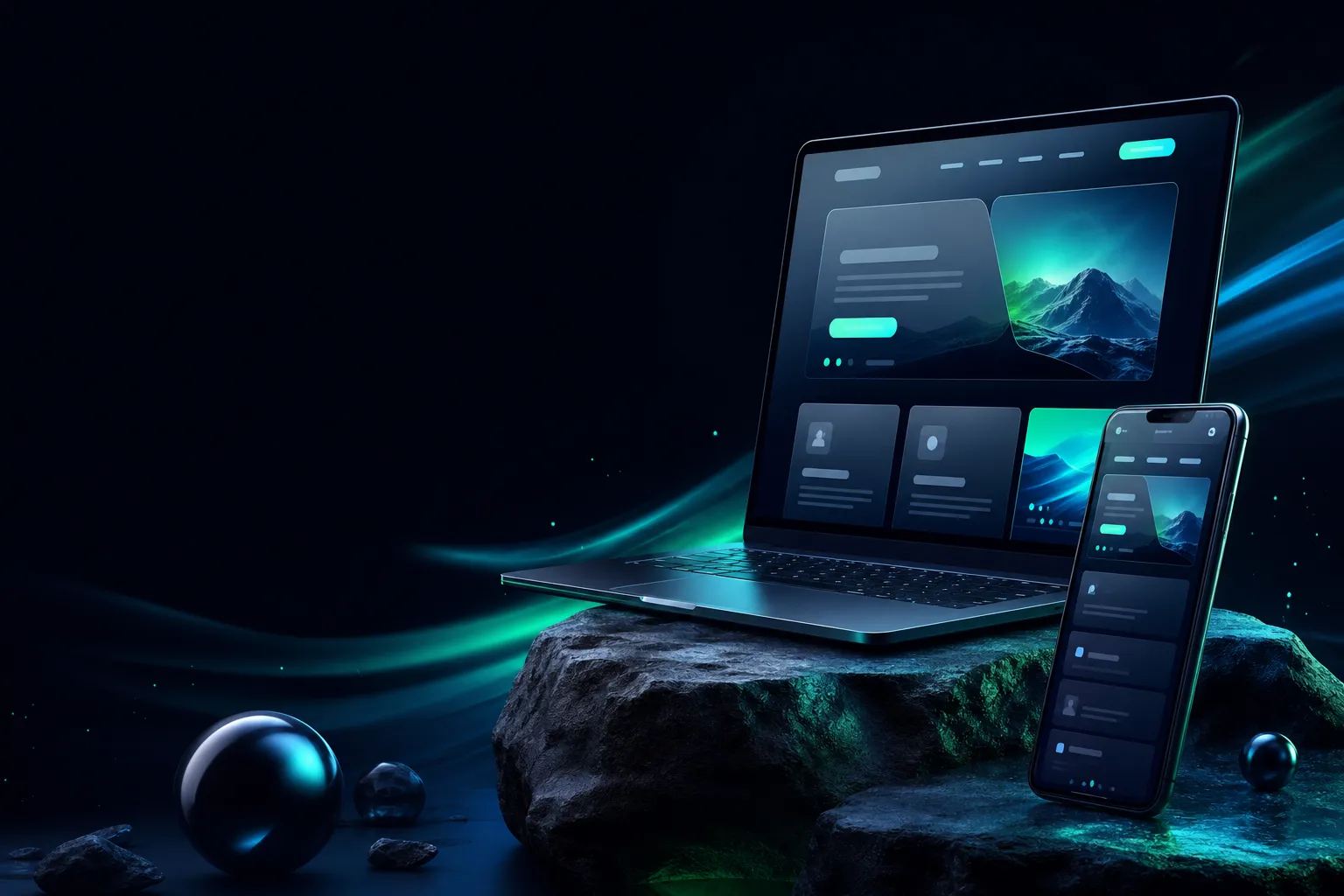
A clean, branded website is more than a digital business card—it is often the first impression a customer has of your business. At AWEBCs in Uttarakhand, India, we design websites that reflect your brand identity and work seamlessly on phones, tablets, and desktops. Our approach focuses on clarity, usability, and visual consistency, ensuring that every visitor can find what they need without frustration. Whether you are a local shop or a growing service provider, we build sites that look professional and perform reliably across all devices.
When we talk about web design india, we mean creating sites that meet the expectations of today's mobile-first audience. Many potential customers will leave if your site is hard to navigate or looks outdated on their phone. Our designs prioritise responsive layouts, readable typography, and intuitive menus. We test each layout on multiple screen sizes to confirm that buttons are easy to tap and text is legible without zooming. This attention to detail helps reduce bounce rates and keeps visitors engaged longer.
Branding is at the heart of our design process. We work with you to understand your business values, colours, and logo, and then translate those elements into a cohesive online presence. Consistent use of brand colours, fonts, and imagery builds trust and recognition. Even if you do not have a full brand guide, we can help refine your visual identity for the web. The goal is to make your website feel like a natural extension of your business, not a generic template.
Responsive design is not just about making things fit—it is about delivering an optimal experience on every device. We use flexible grids, media queries, and touch-friendly interactions to ensure your site adapts gracefully. We also consider loading times, compressing images and minimising unnecessary scripts. A fast, responsive site improves user satisfaction and can positively influence search engine rankings. We check performance on actual devices, not just simulators, to catch real-world issues.
If you are searching for a web design company india, AWEBCs offers a local, hands-on approach. We are based in Uttarakhand and understand the needs of businesses in Uttarakhand and beyond. We keep communication clear and involve you at every stage, from initial concept to final launch. Our aim is to deliver a website that not only looks good but also supports your business goals. Contact us to discuss how we can create a clean, branded website that works on every screen.
In a competitive local market like Uttarakhand, an outdated website can silently drive customers away. When your site looks like it was built years ago—cluttered layouts, tiny text, or broken links—visitors may question the credibility of your business. People often judge a company's professionalism by its website. If your site does not reflect your current brand or offerings, you risk losing trust before a potential customer even contacts you. First impressions are formed in seconds, and an outdated design can leave the wrong impression.
An unbranded website is equally problematic. If your site uses generic stock photos and default templates without your logo, colours, or unique messaging, it becomes forgettable. Customers may not remember your business or confuse it with competitors. Branding creates recognition and emotional connection. Without it, your website is just another page on the internet. In Uttarakhand, where word-of-mouth and local reputation matter, a consistent brand identity online reinforces the trust you have built offline.
Mobile usability is a critical factor. Many customers in Uttarakhand access the internet primarily through smartphones. If your website is not responsive—meaning it does not adapt to smaller screens—visitors will struggle to read content or tap buttons. They may leave and never return. Google also prioritises mobile-friendly sites in search results, so an outdated site can hurt your visibility. Investing in responsive web design is not optional; it is essential for reaching today's audience.
Outdated websites often suffer from slow loading times, security vulnerabilities, and poor navigation. These issues frustrate users and can lead to lost sales or enquiries. For example, if a contact form does not work or a page takes too long to load, potential customers may give up. Regular updates and modern design practices mitigate these risks. A website is not a one-time project; it requires ongoing care to remain effective and secure.
If you are considering a redesign, it is wise to consult a professional web design company india that understands local nuances. AWEBCs, based in Uttarakhand, can assess your current site and recommend practical improvements. We help you avoid the pitfalls of outdated design and create a site that aligns with your brand and meets customer expectations. Do not let an outdated website cost you business—take action to modernise your online presence and stay competitive.
Our web design service is tailored for local businesses in Uttarakhand and the surrounding areas. Whether you run a retail store, a restaurant, a clinic, or a service-based business, we create websites that help you connect with your community. We understand the importance of showcasing your location, hours, and contact details clearly. A well-designed site can drive foot traffic and phone calls. We focus on making it easy for local customers to find you and take action, whether that means visiting your store or calling for an appointment.
Startups often need a website that establishes credibility quickly. As a new venture, you may not have a large budget, but you still need a professional online presence. We work with you to prioritise features that matter most, such as a clear value proposition, essential contact forms, and a blog for sharing updates. Our designs are scalable, so your site can grow with your business. We avoid unnecessary complexity and focus on what will help you attract your first customers and investors.
Growing teams and established businesses also benefit from our service. If you are expanding your offerings or targeting new markets, your website needs to evolve. We help you add new sections, integrate booking systems, or showcase case studies. For teams, we ensure that the website supports collaboration and internal communication, such as employee directories or client portals. Our goal is to create a site that adapts to your changing needs without requiring a complete overhaul each time.
Non-profit organisations and community groups in Uttarakhand can also leverage our web design services. We understand the unique challenges of limited budgets and the need to communicate your mission effectively. We design sites that highlight your cause, make donating easy, and share stories that resonate with supporters. Whether you need a simple informational site or a platform for volunteers, we can help you create a meaningful online presence that aligns with your values and engages your audience.
If you are searching for web design for business india, AWEBCs offers a personalised approach that caters to diverse needs. We serve clients across Uttarakhand and beyond, from small local shops to growing enterprises. Our process is collaborative, and we take the time to understand your specific goals. Whether you are just starting out or looking to refresh your existing site, we provide solutions that are practical, affordable, and effective. Contact us to discuss how we can support your business journey.
Every web design project at AWEBCs includes a responsive layout as standard. We build your site using flexible grids and media queries so it automatically adjusts to the screen size of the visitor's device. This means your content remains readable and navigable on smartphones, tablets, laptops, and large desktop monitors. We pay attention to touch targets, font sizes, and image scaling to ensure a seamless experience. Responsive design is not an add-on; it is fundamental to how we build websites for today's multi-device world.
Branding is integrated into every aspect of our design. We start by understanding your brand identity—your logo, colour palette, typography, and tone of voice. If you do not have a formal brand guide, we help you define these elements. We then apply them consistently across your website, from the header to the footer. This creates a cohesive look that reinforces recognition and trust. We also ensure that your branding is applied to forms, buttons, and interactive elements, so the user experience feels unified.
Device testing is a crucial part of our process. We do not rely solely on browser simulators; we test your website on actual phones, tablets, and desktops to catch real-world issues. This includes checking load times, touch responsiveness, and visual consistency. We also test across different browsers and operating systems to ensure compatibility. If we find any problems, we fix them before launch. This thorough testing helps prevent surprises and ensures that your site performs reliably for all visitors, regardless of their device.
In addition to responsive layouts and branding, we include essential features such as contact forms, Google Maps integration, and basic search engine optimisation. We make sure your site is easy to update, with a content management system that suits your comfort level. We also provide training so you can make simple changes yourself. For businesses that need ecommerce functionality, we can integrate secure payment gateways and product catalogues. Our goal is to deliver a complete package that covers both design and functionality.
When you compare web design cost india, it is important to consider what is included. At AWEBCs, we are transparent about deliverables. Our quotes cover design, development, testing, and launch support. We do not hide fees for responsive design or device testing—they are part of our standard service. We believe in providing value without compromising on quality. If you need a website that looks great and works flawlessly on every device, contact us for a detailed proposal tailored to your needs.
Our web design process begins with discovery. We meet with you to understand your business, target audience, and goals for the website. We ask about your brand, competitors, and any specific features you need. This phase helps us define the scope and create a project plan. We also discuss your budget and timeline so we can align expectations. Clear communication from the start ensures that we are building a website that meets your needs and avoids costly revisions later.
Next comes the design phase. Based on the discovery insights, we create wireframes and visual mockups. Wireframes outline the structure and layout, while mockups show the look and feel with your branding applied. We share these with you for feedback and make revisions until you are satisfied. We focus on creating a clean, user-friendly design that guides visitors to take action. Once the design is approved, we move to development. We keep you informed of progress and are available to answer questions.
During the build phase, we turn the approved design into a fully functional website. We write clean, semantic code and integrate any required features, such as contact forms, galleries, or ecommerce functionality. We test continuously to ensure everything works as intended. If you need an ecommerce website development company india, we can implement secure shopping carts, payment gateways, and product management systems. We also optimise for speed and search engines. You will have opportunities to review the site on a staging server before it goes live.
Before launch, we conduct thorough testing across devices and browsers. We check for broken links, form errors, and loading issues. We also verify that your branding is consistent and that all content is accurate. Once everything is approved, we deploy the site to your hosting environment. We can assist with domain setup and SSL certificates if needed. After launch, we provide training so you can manage basic updates. We also offer ongoing support to address any issues that may arise.
Understanding web design price india can be confusing, as costs vary widely. At AWEBCs, we provide transparent quotes based on the scope of work. We do not charge extra for responsive design or device testing. Our pricing reflects the time and expertise required to deliver a quality website. We are happy to discuss your budget and find a solution that fits. To get started, contact us for a free consultation. We will guide you through each step and ensure your project is completed on time and within budget.
Design pricing rests on scope, and scope means the number of pages, the depth of each one, and how much branding work sits behind them. A five-page brochure site with a ready logo is a different job from a twenty-page site with a new identity system. Before you ask anyone for a figure, list every page you need, note which pages carry forms, catalogues or booking flows, and decide whether your logo, colours and fonts already exist. A clear scope document is the single most useful thing you can bring to a first conversation with a website development company in uttarakhand.
The next step is separating pages into templates. A homepage, a service page and a contact page each need their own layout, but ten service pages can share one template with different content. Designers price template work and unique layout work differently because each unique layout takes more time to sketch, review and build. When you review a proposal, check whether it counts pages or templates, and ask how many revision rounds each layout includes. That one question prevents most billing surprises later in the project.
Branding needs deserve their own line in the budget. If you have a logo and a colour palette, the designer applies them and moves on. If you do not, someone must decide typography, colour contrast, spacing and image style before page design can start. That decision work is real work. Ask whether brand exploration is included or quoted separately, and request to see how the chosen colours behave on buttons, links and form fields, not just in a logo mockup.
If you are selling products, the scope grows quickly, and this is where questions about ecommerce website development cost india usually begin. Catalogue size, payment options, delivery rules, tax handling and stock management all change the build. A sensible approach is to launch a clean branded storefront first and add complexity in phases. Ask for the ecommerce website development packages in india that a firm offers and compare exactly what each tier includes, rather than comparing headline figures that hide different levels of work.
Finally, agree on what triggers a change order. Adding a page mid-project, changing the navigation structure after approval, or supplying new copy late all affect timelines and cost. Put the page list, template count, revision rounds and content responsibilities in writing. When something genuinely new appears, ask for the impact in time and money before work starts. That habit keeps the project predictable and keeps the relationship with your designer straightforward from kickoff to launch.
Handover is not the end of the project. Once the site is live, someone must keep software updated, watch for broken links, renew the domain and hosting, and fix anything that stops working after a browser update. Decide early who that person is. If it is you, ask for documentation covering how to log in, how to edit content, how backups run and who to contact in an emergency. If it is the design team, agree the support arrangement before launch, not after the first problem appears.
A practical support plan names response times and working hours. You do not need a complicated contract, but you do need to know whether a broken contact form on a Friday evening waits until Monday. Ask how issues are reported, whether there is an email address or ticket system, and what counts as a fix versus a new request. Small changes such as swapping a photo or correcting a phone number should be quick; larger additions should be quoted. Clear boundaries protect both sides.
Content updates are the most common post-launch need. A site that advertises seasonal offers or changing stock needs someone able to edit text and images without breaking the layout. Ask for a short training session or a written guide during handover, and test it yourself by making one real edit before the designer steps away. If you would rather not touch the site at all, confirm that content edits are part of the support arrangement and how they are requested.
Monitoring matters as much as fixing. Basic checks include whether the site loads correctly on a phone, whether forms deliver to the right inbox, whether the security certificate is current and whether backups actually restore. A monthly review of these items catches most problems while they are small. If you run a store, also check that orders and payment confirmations arrive correctly after any update. Ask your provider which of these checks they perform and how they report them.
When your needs grow, revisit the arrangement. A brochure site that gains a blog, a booking tool or a product catalogue will need different support than it did at launch. Ask for a review once a year and confirm what is covered. If you are comparing providers, an affordable web design company india option can still include sensible support terms, so read the details rather than the price alone. Good support is boring, predictable and worth arranging in advance.
Security starts with the basics that are easy to skip. Every site we build uses a current security certificate so visitors see a secure connection, and forms submit over encrypted connections. Administrative logins are kept separate from public pages, with strong passwords and, where the platform allows, two-factor authentication. Software, themes and plugins are kept to a small, known set and updated on a schedule, because outdated components are the most common way a small business site is compromised.
Input handling is the next layer. Contact forms, search boxes and login fields are places where malicious code can be entered, so we validate and sanitise what users submit and never trust data arriving from a browser. Upload features are restricted by file type and size. Where a site stores customer details, we keep only what the business actually needs and make sure the storage is protected. These steps are invisible to visitors, which is exactly how they should be.
Backups and recovery deserve a plan, not just a button. We set automatic backups and confirm that a restore works, because an untested backup is only a hope. The plan states how often backups run, where copies are stored and who can restore them. If your site takes orders or enquiries, a quick recovery matters commercially. Ask any provider how backups are handled, how long copies are kept and whether restoration is included in support or charged separately.
Access control keeps the circle small. Each person who edits the site should have their own account with only the permissions they need, so a content editor cannot change settings and a former employee loses access on their last day. We review accounts at handover and recommend a periodic review afterwards. For stores, payment processing is handled by established payment providers rather than storing card details on your own server, which reduces risk considerably.
No design project can promise perfect security, and any provider who does should be questioned. What we can do is remove the obvious weaknesses, keep components current and give you clear instructions for reporting a problem. If you are planning a store, include security in your questions about custom ecommerce website development india and ask how customer data, orders and admin access are protected. Understanding those answers before you sign is far easier than fixing a breach afterwards.
A standard package is a defined piece of work, and knowing its edges helps you plan. Typically it covers a set number of pages built from agreed templates, responsive layouts for phones, tablets and desktops, basic on-page setup such as page titles and descriptions, a contact form and a launch check. It usually assumes you supply the text, images and logo. That assumption is where many projects slow down, because content rarely arrives on schedule.
What a standard package usually does not include is equally important. Copywriting, photography, logo design, translation, custom illustrations and advanced integrations are normally separate. So are large catalogues, multi-language versions, membership areas and bespoke calculators. If your project needs any of these, raise it at the quoting stage so the scope reflects reality. Discovering a missing feature after design approval means a change order, extra cost and a delayed launch for everyone involved.
Content responsibility is the most common gap. If you cannot supply final text, ask whether copywriting is available and what it costs, or plan time to write it yourself. The same applies to images: stock photos are fine for some sections, but product shots and team photos need to be real. Gather these before design begins, because placeholder text and images hide layout problems that only appear when real content arrives.
Maintenance, hosting and domain renewal often sit outside a design package. Confirm who pays for hosting, who renews the domain and whether updates are included after launch. Ask whether the package includes a training session and written handover notes. For stores, check whether product entry, payment setup and shipping rules are included or quoted separately, since these tasks can take longer than the design itself.
When comparing options, read the inclusions line by line rather than the total. A lower figure may exclude content, revisions or support that another quote includes. If you need a store, ask specifically what the ecommerce website design company india you are considering covers in its base tier and what is added later. A clear list of exclusions is not a weakness in a proposal; it is a sign the provider has thought about the work.
DIY builders are genuinely useful for some situations. If you need a simple presence quickly, have a small budget and are comfortable learning a tool, a builder can get you online. The trade-offs are template-driven layouts that look like many other sites, limited control over fine design details, and your own time spent learning the interface. You also become the person responsible for updates, backups and troubleshooting, which is fine if you enjoy that work and less fine if you do not.
Freelancers offer a middle path. A good freelancer gives you direct communication, flexible pricing and personal attention, and many produce excellent work. The risks are capacity and continuity: one person may be unavailable during a busy period or step away entirely, leaving you without support. Ask about their process, who covers for them, how they handle handover and whether they work with a team. Check recent work on live sites and speak to a past client before committing.
A studio or agency brings a team, documented process and cover when someone is away. You get design, development and support in one place, along with a written scope and handover. The trade-off is usually a higher price and less direct access to the person doing the work. For a business site that must stay reliable, that structure is often worth it. For a small personal project, it may be more than you need. The right choice depends on what happens after launch.
Consider what happens when something breaks. With a builder, you troubleshoot yourself or wait for support. With a freelancer, you call one person who may or may not be free. With a team, there is usually a process and a backup. None of these is automatically better; they are different levels of risk. Write down how quickly you need problems fixed and how much you are willing to manage yourself, then choose the option that matches those answers.
A practical way to decide is to list the work you will not do yourself. If content, updates, security and support all fall to you, a builder may suit. If you want them handled, look for a provider with clear terms. A local website development company in uttarakhand offers the advantage of a conversation in person and knowledge of the local market. Whichever route you take, ask the same questions about scope, handover and support, and compare the answers honestly.
The most frequent problem we see is a layout that tries to say everything at once. Too many banners, sidebars and competing buttons leave visitors unsure where to look or click. Our first step is a content audit: list every block on the page, decide what the visitor needs first, and move the rest to secondary pages. Check the result on a phone, not just a desktop monitor, because clutter that feels manageable on a large screen often becomes unreadable on a small one.
Broken mobile views rarely come from one dramatic failure. They build up from fixed widths, tiny tap targets and text that overflows its container. We test each template at common phone, tablet and laptop sizes, then fix spacing, font sizes and button areas so nothing requires pinching or sideways scrolling. If you cannot comfortably tap a link with a thumb, that is a signal to adjust before launch rather than after. As a responsive web design company india teams rely on for practical fixes, we treat these checks as routine, not optional.
Weak branding shows up as mismatched colours, three different logo versions and fonts that change from page to page. We consolidate this into a short style reference: one primary colour, one accent, two typefaces and clear rules for headings and buttons. Then we apply it consistently across every template. Before signing off, open several pages side by side and ask whether they look like one company. If the answer is uncertain, the branding rules need tightening.
Navigation is another quiet culprit. Menus that hide key pages, labels written in internal jargon, and footers stuffed with links all frustrate buyers. We simplify menus to the pages that matter, use plain words customers recognise, and keep contact details visible. Ask a colleague unfamiliar with your business to find a product and a phone number in under a minute; if they struggle, the structure needs work.
Finally, we fix speed and image problems that make good designs feel broken. Oversized photographs, autoplaying video and heavy sliders slow pages on mobile networks. We compress images, remove unnecessary scripts and set sensible loading priorities. When you review the site, test it on a normal phone connection rather than office Wi-Fi. If pages still feel slow, ask for a performance review before adding more features.
Start by asking who will actually do the work. Some agencies sell the project and hand it to freelancers you never meet. Ask for the names of the designer and developer assigned to you, how communication will happen, and who answers questions after launch. A partner based in Uttarakhand, India, like AWEBCs, can meet in person when needed, but clarity about roles matters more than proximity alone.
Ask to see live websites they built, not just screenshots. Open those sites on your own phone and check the menus, forms and loading speed. Then ask what they would do differently on those projects today. Honest partners will point out improvements; vague answers about 'beautiful designs' tell you little. If you are comparing options nationally, reviews and portfolios help identify the best web design company india buyers can verify, but always test the work yourself.
Clarify the revision process in writing. How many rounds are included, what counts as a revision versus a new request, and how quickly will changes be made? Ask who owns the design files, domain, hosting account and content management system login once the project ends. Ownership should be in your name from day one, with credentials handed over at completion.
Ask how they handle content. Will they write copy, or do you supply it? Who sources and optimises images? A package that assumes you will produce everything can stall for weeks. Also ask about training: will someone show your team how to edit pages, add products or update news without breaking the layout? A short handover session prevents dependency.
Finally, ask about support after launch. What happens if a form stops sending email or a page breaks after an update? Is there a maintenance arrangement, and what is the response process? Get the scope of post-launch help in writing. For businesses planning to sell online, ask directly about ecommerce website design india experience and request examples of stores they have launched and maintained.
Ownership is the question buyers should ask first. You should own your domain name, hosting account, content and the finished design files. Register the domain in your company's name, keep the registrar login yourself, and insist that hosting is set up under an account you control. At handover, request administrator access to the website platform along with any licence details. If a provider resists transferring control, treat that as a warning sign rather than a technical detail.
On revisions, most projects include a set number of feedback rounds during design and a smaller number after build. A revision usually means adjusting colours, spacing, wording or layout within the agreed structure; a new page, new feature or changed direction is new scope. Ask for this distinction in writing before work begins. Keep feedback consolidated in one document per round so changes are not scattered across emails and chat messages.
Device compatibility questions centre on phones. Confirm the design will be tested on current Android and iOS devices, common tablet sizes and desktop browsers. Ask which browsers they support and whether older browsers matter to your audience. Request that you see the site on a real phone before final payment, not only in a browser preview window. Test forms, menus and phone links yourself, because these are the elements visitors use most.
Buyers also ask about timelines and content. A realistic schedule depends on how quickly you supply text, images and approvals. Ask what happens if content arrives late and whether the launch date shifts accordingly. Confirm who writes the copy and who checks facts, spelling and contact details. Design time is usually shorter than content preparation, so plan internal review time before the project starts.
Finally, ask about training and handover. Will you receive a walkthrough of the admin area, written notes on common tasks and a contact for questions in the first weeks? Ask how backups are handled and who restores them. Clear answers here separate organised partners from those who disappear after launch. For shops, ask how product uploads, orders and payment settings are managed day to day.
Our packages begin with a home page built to answer three questions quickly: what you offer, who it is for and how to contact you. We design a clear headline area, a short introduction, key services or products, and visible contact details. The layout is planned mobile-first, so the most important content appears early on a phone screen. You review this page first because it sets the visual direction for everything that follows.
Service or product pages come next. Each page gets a consistent structure: a descriptive heading, a plain explanation, supporting images and a clear next step such as an enquiry form or call button. We avoid dumping long text without headings. If you sell online, these pages form the base for ecommerce website design services india clients typically need, including category pages, product listings and a straightforward cart and checkout flow.
An about page and a contact page are standard inclusions. The about page covers your background, location and team in honest, specific language rather than generic claims. The contact page includes your address, phone number, email, opening hours and a working enquiry form, plus an embedded map where useful. We test the form by sending a real message and confirming it reaches the right inbox.
We also build the supporting pages most sites need: a privacy policy, a terms page where relevant, and a simple thank-you page after form submission. Navigation, footer links and basic on-page search settings are configured so visitors and search engines can find pages. For businesses selling products, ecommerce website development services in india often include setting up payment and shipping options, which we scope separately based on your requirements.
Finally, the package covers setup and handover. That means configuring hosting, connecting your domain, installing the website platform, adding basic analytics and checking the site across phones, tablets and desktops. You receive a short training session and login details in your own name. We list exactly which pages are included in your quote so there are no surprises when the site goes live.
Our design service does not include ongoing content writing beyond the pages agreed in your quote. If you need blog articles, product descriptions or regular news updates, that is a separate arrangement. We can advise on structure and tone, but producing large volumes of text takes time and should be planned and budgeted for. Many projects slow down because content arrives late, so decide early who will write and approve it.
We do not provide photography, video production or custom illustration unless specifically quoted. Stock images can be licensed, but original photos of your premises, team or products usually work better. You are responsible for supplying images you have the right to use, and for confirming permissions for staff or customer photos. We will place and optimise the images you provide, but we do not source professional shoots as part of a standard package.
Search engine optimisation beyond basic setup is not included. We configure page titles, descriptions, headings and sensible URLs, and we make sure the site loads reasonably fast. Ongoing keyword research, link building, content campaigns and monthly reporting are separate services. Be cautious of anyone promising specific rankings as part of a design package; sustainable search results depend on consistent work over time, not a one-off build.
Paid advertising, email marketing setup and social media management sit outside our scope. We can connect your site to analytics and enquiry forms, but running campaigns, writing ad copy and managing budgets is different work. If you plan to advertise, tell us during planning so tracking and landing pages are set up correctly from the start rather than patched in later.
Finally, we do not cover domain purchase fees, hosting subscriptions, premium plugin licences or payment gateway charges, which are paid directly by you to the relevant providers. Ongoing maintenance, security updates and emergency fixes are available under a separate arrangement. Keeping these items separate means you retain control of accounts and costs, and you can see clearly what you are paying for.
A realistic timeline starts with a clear brief. Before design begins, we ask what the site must do, who visits it, and which pages carry the most weight. Vague briefs stretch every later stage, so we spend time turning goals into a written scope with page lists, content owners and approval steps. For buyers comparing a web design studio india option, this early clarity is often the difference between a calm launch and weeks of rework. You leave this stage knowing what will be built and who signs off.
Once scope is agreed, structure and visual design follow. We map the sitemap, sketch key page layouts, and design the home page plus representative inner pages before rolling out the rest. Each round has a fixed number of review passes, so feedback stays focused on content, hierarchy and brand fit rather than endless cosmetic tweaks. Expect your team to review on real devices, not only a large monitor, because a layout can look fine on desktop yet crowd on a phone.
Build and content entry run in parallel where possible. Developers turn approved designs into responsive templates while your team supplies text, images and documents. The single biggest delay we see is missing content, so we set a content deadline and treat it as a milestone. Pages are assembled, forms connected, and menus checked. If you are also working with a web development company india partner, agree early who owns hosting, domains and integrations to avoid duplicated effort.
Testing is where timelines are protected or lost. We check layouts on phones, tablets and desktops, test forms and links, confirm page speed basics, and review accessibility items such as contrast and alt text. You then run a final content proofread. Collect all feedback in one place and send it in a single batch, because scattered comments across email threads slow every fix. Allow a short window for corrections before launch.
Launch itself is quick when preparation is done. We schedule a quiet period, back up the existing site, publish, and check the live pages, redirects and forms. After going live, watch analytics and error reports for the first days. Timelines vary with page count, content readiness and review speed rather than design alone, so ask for a stage-by-stage schedule in writing and agree what happens if content arrives late.
Migration begins with an inventory. We list every page, image, PDF and form on your current site, note which pages rank or receive traffic, and mark each item as keep, rewrite, merge or retire. This prevents the common mistake of copying an old site wholesale into a new design, which carries forward outdated wording and thin pages. If you are unsure which content earns visitors, ask for an analytics review before deciding what to drop.
Next we plan the mapping. Each old URL gets a destination on the new site, and pages that disappear are pointed to the closest relevant replacement. Redirects are written and tested before launch, not after. We also check internal links so navigation does not lead to dead ends. A website design company india team handling this step should show you the redirect list for approval, because a missed redirect can quietly cost you visitors who bookmarked or shared an old page.
Content is then cleaned and restructured. Long paragraphs are broken into scannable sections, headings are made consistent, and images are compressed and renamed meaningfully. Alt text is added for accessibility and search visibility. Where the old copy no longer matches your services, we rewrite it with you rather than pasting it unchanged. This is also the moment to remove duplicate pages and consolidate overlapping topics into one strong page.
Technical transfer covers media, documents and any data your site collects. We export images and files at suitable sizes, move form submissions or subscriber lists where needed, and confirm that contact details and business information are accurate everywhere they appear. Check that downloads still open, forms still deliver to the right inbox, and any embedded maps or videos load correctly. Test these on a phone as well as a desktop before sign-off.
Finally, we verify the migrated site against the inventory. Every keep item should exist, every retired item should redirect, and no page should show placeholder text. After launch, monitor search console reports for broken links and unexpected errors for a few weeks. If migration involves complex systems, large catalogs or regulated data, ask for help early rather than improvising, since fixing a faulty migration later is far more disruptive than planning it properly.
Training starts from tasks, not features. We ask who will update the site and what they actually do: publish news, edit service pages, swap banners, add staff profiles or upload documents. From that list we build a short practical curriculum so each person learns only what their role requires. Editors who never touch layout settings should not sit through developer-level sessions. This keeps training focused and makes it easier for your team to remember what matters.
Sessions are hands-on. We walk through the content system on your own site, with your own pages, while each person follows along on their own login. They practise adding a page, editing text, uploading and cropping images, and previewing before publishing. We cover the small traps too, such as pasting text from word processors, choosing the right image size, and writing headings in the correct order. Questions are answered live, and we repeat any step until it feels routine.
We also document the workflow. Your team receives short written guides with screenshots for the most common tasks, plus a simple checklist for publishing: check spelling, check the image on a phone, confirm links, then publish. Roles and permissions are set so that only trusted users can change navigation or delete pages. Knowing who to contact when something looks wrong is part of the training, not an afterthought.
After the sessions, we run a supervised practice period. Team members make real updates while support is available, and we review the first few changes together. This catches habits that need correcting before they become routine. If your staff change frequently, nominate one internal champion who can onboard newcomers using the same guides. A website design firm india working with growing teams should plan for this turnover rather than assume the original trainees stay forever.
Refresher sessions are worth scheduling after a few months, once the team has met real situations. Bring a list of anything that felt awkward, and we will adjust the setup or the documentation. If a task needs code changes or touches site structure, ask for help instead of experimenting on the live site. The goal is confidence: your team should be able to handle routine updates quickly, while knowing which changes deserve a professional review.
A live website is not a finished object. Software updates, browser changes and new device sizes gradually affect how a site behaves. A maintenance plan sets a regular rhythm for checking that pages still load, forms still deliver, and layouts still hold on current phones and tablets. Rather than waiting for a visitor to report a problem, scheduled checks catch small issues while they are still cheap to fix and before they affect enquiries.
Routine maintenance covers updates, backups and security basics. We apply updates to the content system and its components, take regular backups, and confirm that the site recovers cleanly if something goes wrong. Uptime and error monitoring alert us to failures quickly. Access is reviewed so former staff no longer hold logins. These tasks are unglamorous, but they prevent the outages and broken pages that damage trust with visitors who arrive expecting a working site.
Content freshness is the other half. We review key pages for outdated offers, expired dates, stale team details and broken links, and suggest improvements where pages have grown long or unclear. Images are compressed and replaced when they slow pages down. If your site collects enquiries, we check that notifications reach the right inbox and that spam filtering works. A website that looks current signals an active business, which matters to buyers comparing suppliers.
Reporting keeps the plan honest. Each cycle, you receive a short summary of what was updated, what was fixed and what needs your decision, such as content that only you can approve. We flag items that fall outside routine maintenance, like new features or structural changes, and quote them separately so there are no surprises. If you work with an in-house web development company india team, agree clearly which tasks sit with them and which sit with us.
Choose a plan that matches how often your site changes. A brochure site with occasional updates needs less than a site publishing regularly or taking bookings. Ask what happens in an emergency, how quickly routine requests are handled, and what is excluded. Review the plan once a year against your actual needs, and raise concerns early if response times or coverage no longer fit, so maintenance stays useful rather than becoming a line item nobody checks.
Getting started is straightforward. Send us a short note describing your business, what the website should achieve, and any sites you admire or dislike. If you have an existing site, share the address and the problems you want solved. From that, we arrange a conversation to clarify goals, audience and must-have pages. There is no need for a polished brief at this stage; an honest description of your situation is more useful than perfect wording.
In that first conversation we ask practical questions: who updates the site, what content already exists, whether you need bookings, payments or multilingual pages, and when you hope to launch. We explain how we work, what we need from you, and where decisions will be required. You should leave understanding the stages, the approvals involved and roughly what your team must contribute, so you can judge whether the project fits your capacity as well as your budget.
After that, we prepare a written proposal covering scope, page structure, timeline stages and responsibilities. Read it carefully and tell us what is unclear or missing. It is far easier to adjust scope before work begins than midway through design. If you are gathering quotes, compare what each proposal includes rather than headline figures alone, and ask how content, training and post-launch support are handled. A clear proposal protects both sides.
When you are ready to proceed, we confirm the schedule, set up a shared space for content and feedback, and agree who approves each stage. You will know what to send us and by when. Early tasks usually include supplying text, images and brand assets, and confirming the sitemap. Prompt content and consolidated feedback keep the project moving, and we will tell you plainly if something is falling behind so it can be addressed.
We are based in Uttarakhand, India, and work with businesses that want clean, branded website design that works on phones, tablets and desktops. To begin, contact AWEBCs with your goals and current site details, and we will suggest a sensible first step. If you are still deciding what you need, ask for a short call rather than a full brief; a twenty-minute conversation often clarifies more than a long document.